
Training
How to Train Persian Cats: Easy Training Tips for a Well-Behaved Feline
Many people believe that felines cannot be trained, and that calm, relaxed Persian cats are especially uninterested in learning. In truth, Persian cats are smart, gentle animals that can learn many useful behaviors and even a few fun tricks. Training does not mean forcing your feline to obey like a dog. Instead, it means using patience, rewards, and routine to guide your feline toward good habits. In this guide, you will learn how to train Persian cats using simple, kind methods that build trust and make daily life easier for both of you.
Can Persian Cats Be Trained?
Yes, Persian cats can be trained. They may not be as energetic or eager as some breeds, but they are intelligent and respond well to gentle, positive training. Persian cats have a calm and patient nature, which can actually make them good students when training is done at the right pace.
The key is understanding what motivates your feline. Most Persian cats love tasty treats, gentle praise, soft stroking, and short play sessions. When a good behavior leads to something pleasant, your feline is more likely to repeat it.
Why Training Is Helpful
Training gives Persian cats mental stimulation, which is important for indoor felines. It helps prevent boredom and unwanted behaviors, such as scratching furniture or waking you up at night. Training also makes daily care easier. A Persian cat that is used to being handled, brushed, and placed in a carrier will find grooming, vet visits, and travel much less stressful.
Perhaps most importantly, training strengthens the bond between you and your feline. Short, happy training sessions teach your feline to trust you and enjoy spending time with you.
The Basics of Positive Reinforcement
Positive reinforcement means rewarding the behavior you want to see. When your Persian cat does something good, you immediately give it a reward, such as a small treat or gentle praise. Over time, your feline learns to connect the behavior with the reward.
Never punish, shout at, or hit your feline. Punishment makes felines fearful and can damage your relationship. It may also cause stress-related problems, such as hiding or avoiding the litter box. If your feline does something you do not like, calmly redirect it to a better behavior and reward that instead.
Choosing the Right Rewards
Small, soft treats work best for training. Choose tiny pieces that your feline can eat quickly, such as small feline treats or small bits of plain cooked chicken. Remember that treats add calories, so keep them very small and reduce your feline's meal slightly if you train often. Because Persian cats can gain weight easily, you can also use part of your feline's regular food as training rewards.
Some felines also enjoy praise, gentle stroking, or a few seconds of play with a favorite toy as a reward. Find out what your Persian cat loves most.
Clicker Training for Persian Cats
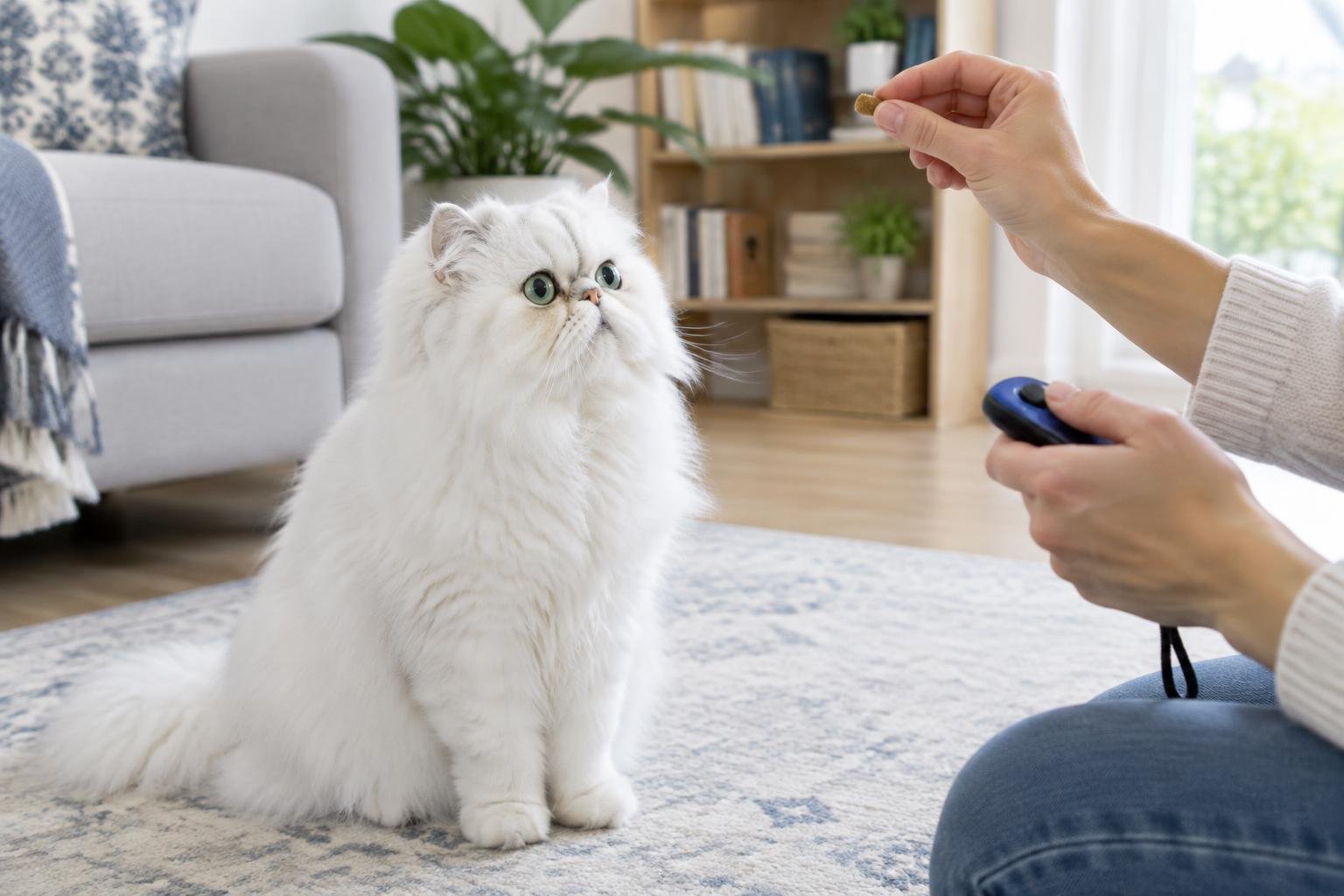
Clicker training is a popular and effective way to train felines. A clicker is a small device that makes a short "click" sound. The click marks the exact moment your feline does the right thing, and a treat follows.
To start, click the clicker and immediately give a treat. Repeat this several times over a few short sessions until your feline understands that the click means a treat is coming. After that, you can use the click to mark good behaviors during training. If your Persian cat is sensitive to sound, try clicking inside your pocket to soften the noise, or use a soft word like "yes" instead.
Keep Training Sessions Short
Persian cats have calm personalities and short attention spans for training. Keep sessions to about 3 to 5 minutes, once or twice a day. Always end on a positive note, when your feline has succeeded. Train before meals, when your feline is a little hungry and more interested in treats, but not when it is very hungry or tired.
Teaching Your Persian Cat Its Name
Teaching your feline to respond to its name is a great first step. Say your feline's name in a happy, gentle voice when it is nearby. When your feline looks at you, reward it with a treat or praise. Repeat this several times a day. Slowly, say its name from further away. Soon, your Persian cat will look at you or come toward you when it hears its name.
Teaching Your Persian Cat to Come When Called
Once your feline knows its name, you can teach it to come. Choose a word or sound, such as "come" or a gentle shake of the treat bag. Start close to your feline, say the word, and reward it when it comes to you. Slowly increase the distance. This is a useful skill in emergencies, when you need to find your feline quickly.
Teaching Fun Tricks
Persian cats can learn simple tricks, such as "sit," "high five," and "touch."
To teach "sit," hold a treat just above your feline's nose and slowly move it back over its head. As your feline looks up, its back end will naturally lower. The moment it sits, click or say "yes" and give the treat. Add the word "sit" once your feline does the action reliably.
To teach "touch," hold out a finger or a small stick near your feline's nose. When your feline sniffs or touches it, reward it. Slowly move the target to different places so your feline follows it.
To teach "high five," hold a treat in a closed hand slightly above your feline's paw. When your feline lifts its paw to touch your hand, reward it. Slowly raise your hand until your feline lifts its paw higher.
Remember that Persian cats prefer calm, gentle activities. Choose tricks that do not require jumping or intense movement.
Carrier Training
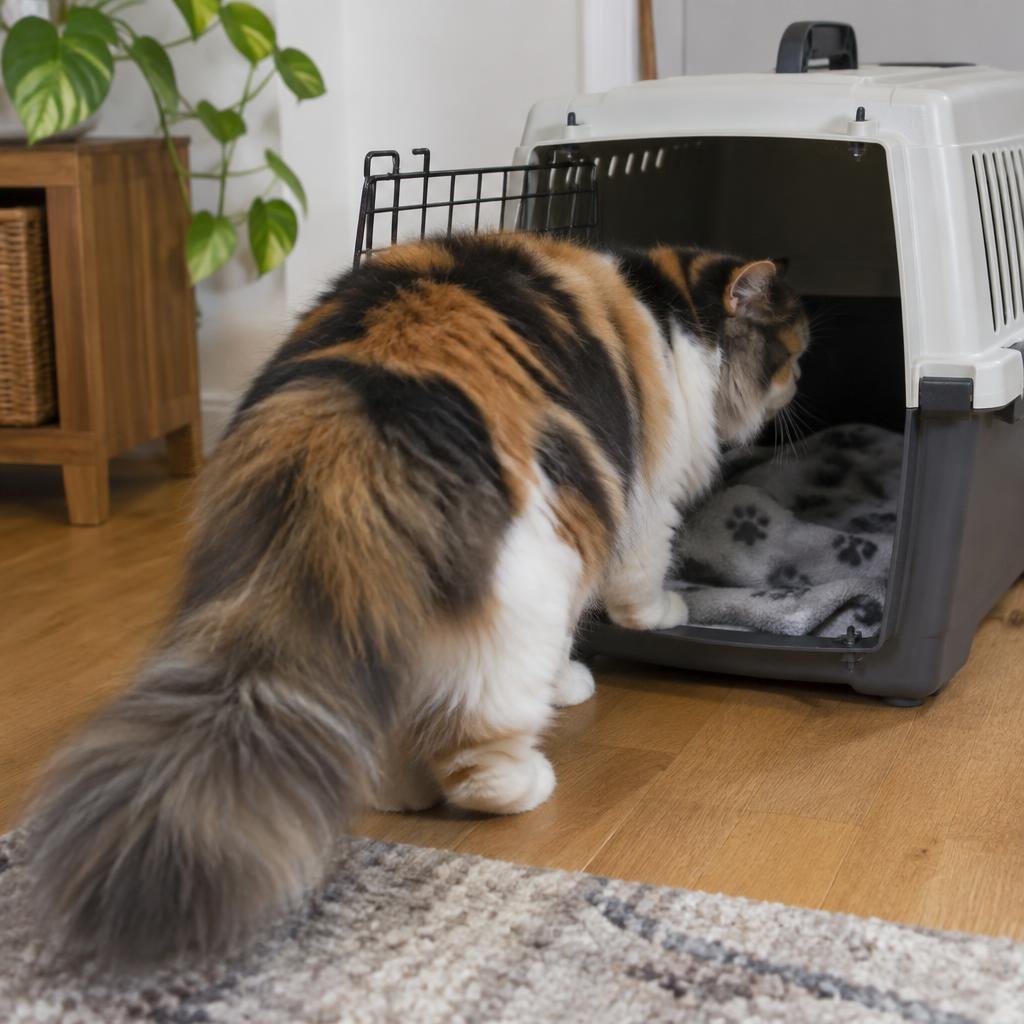
Many felines fear the carrier because it usually means a trip to the vet. Training your Persian cat to feel comfortable in its carrier can make travel much easier. Leave the carrier out in your home all the time, with the door open and a soft blanket inside. Place treats, toys, or even meals inside. Let your feline explore it at its own pace.
Once your feline enters happily, close the door for a few seconds, then open it and reward. Slowly increase the time. Then practice lifting the carrier and walking around the room. Finally, take short car trips that end at home, not at the vet. Over time, the carrier will become a safe, familiar place.
Grooming and Handling Training
Because Persian cats need daily grooming, handling training is very important. Gently touch your feline's paws, ears, face, belly, and tail during cuddle time, and reward it for staying calm. Show your feline the comb and brush, let it sniff them, and reward it. Start with very short brushing sessions on easy areas, such as the back, and slowly move to more sensitive areas. This training makes daily grooming, nail trims, and face cleaning much easier.
Training Good Scratching Habits
Scratching is a natural behavior that keeps claws healthy and marks territory. To protect your furniture, provide sturdy scratching posts and pads. Place them near your feline's favorite resting spots and near furniture it tries to scratch. Rub a little catnip on the post or use a feather wand to encourage scratching there. Reward your feline when it uses the post. If it scratches furniture, calmly move it to the post.
Teaching Your Feline to Stay Off Counters
If you do not want your Persian cat on kitchen counters, give it a better place to be, such as a feline tree or window perch nearby. Reward your feline when it uses these spots. Keep counters clear of food so they are less interesting. Consistency from every family member is important.
Common Training Mistakes
Some common mistakes include training sessions that are too long, using rewards that are not exciting enough, expecting fast results, and being inconsistent. Another mistake is punishing the feline, which makes it fearful. Be patient. Every Persian cat learns at its own pace, and some behaviors may take weeks to learn.
Conclusion
Training Persian cats is not only possible but also enjoyable and rewarding. By using positive reinforcement, small tasty rewards, and short, gentle sessions, you can teach your Persian cat its name, useful skills such as carrier and grooming training, good scratching habits, and even a few fun tricks. Training keeps your feline's mind active, makes daily care easier, and builds a strong, trusting bond between you. With patience and kindness, your Persian cat can become a wonderfully well-behaved companion.