Wet food
Adds valuable moisture, which supports kidney and urinary health — an important consideration for the Persian cat. It's also soft and easy to eat, and often more tempting for fussy eaters.

Breed guide
A healthy, well-cared-for Persian cat is a happy one — and caring for this breed comes down to three things: a good diet, regular grooming, and gentle everyday attention. The Persian cat's long coat, flat face and laid-back, low-energy nature all shape the way it should be fed and looked after. This page brings it all together: what to feed your Persian cat, how to groom it, and the simple daily habits that keep it in top condition.
Part 1
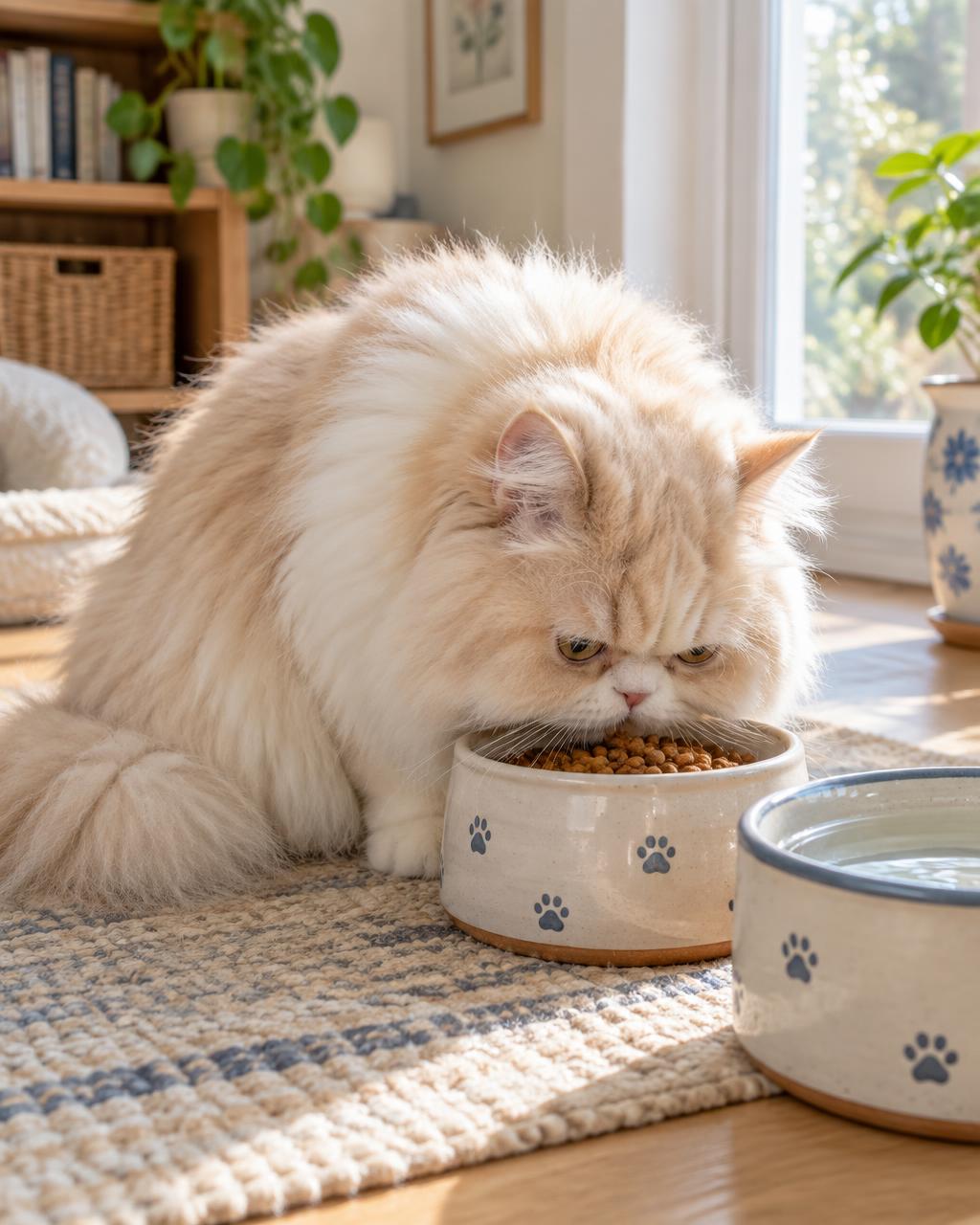
The Persian cat does best on a high-quality, protein-rich diet built around real animal protein. Look for a food that lists a named meat or fish as the first ingredient, since the Persian cat — like all felines — is an obligate carnivore that thrives on animal-based nutrition. A good diet supports a glossy coat, healthy weight and steady energy.
A balanced Persian cat diet should be rich in animal protein, include healthy fats for skin and coat condition, contain essential nutrients such as taurine, vitamins and omega fatty acids, and stay low in unnecessary fillers and carbohydrates. Choosing a food formulated for the Persian cat, or for long-haired breeds, can be especially helpful.
Both wet and dry food have a place in a Persian cat's diet, and many owners do best with a mix of the two.
Adds valuable moisture, which supports kidney and urinary health — an important consideration for the Persian cat. It's also soft and easy to eat, and often more tempting for fussy eaters.
Convenient, helps a little with dental health, and can be left out for grazing. Because the Persian cat's flat face can make round biscuits awkward to pick up, many owners choose specially shaped kibble designed for the breed.
A combination of wet and dry food gives the Persian cat the moisture of wet food alongside the convenience and texture of dry — the best of both worlds.
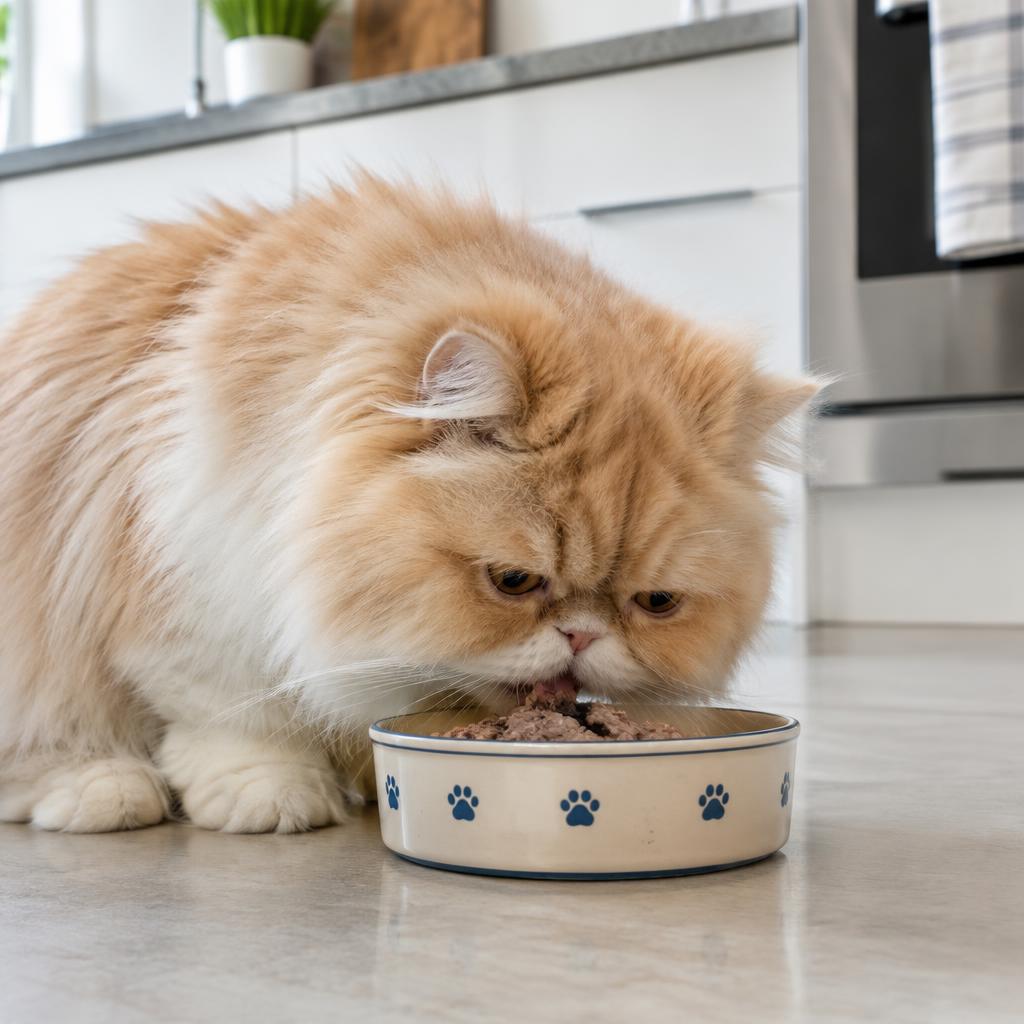
One thing that sets the Persian cat apart at mealtimes is its flat, brachycephalic face. Standard round kibble can be difficult for a Persian cat to grip and chew, sometimes leading to mess or gulped food. Several brands make almond- or wedge-shaped kibble specifically for the Persian cat, which is far easier for the breed to pick up and eat comfortably. Shallow, wide food bowls also help, as they don't press against the Persian cat's face and whiskers.
Feeding amounts depend on your Persian cat's age, weight and activity level, so always start with the guidance on the food packaging and adjust to keep your Persian cat at a healthy weight. As a general rule, kittens need several small meals a day, while adult Persian cats usually do well on two measured meals daily.
Because the Persian cat is a low-energy, sedentary breed, it's easy for it to gain weight — so measuring portions and avoiding constant free-feeding is important. Keep an eye on your Persian cat's body shape, and cut back gently if it starts to look or feel heavy.
| Life stage | Food type | Feeding notes |
|---|---|---|
| Kitten (0–12 months) | High-protein kitten food | Feed little and often — 3 to 4 small meals a day for growth and energy. |
| Adult (1–7 years) | Balanced adult formula | Two measured meals a day; watch portions to prevent weight gain. |
| Senior (7+ years) | Senior / easy-digest formula | Softer, nutrient-rich food; support kidneys, joints and dental health. |
Fresh, clean water should always be available to your Persian cat. Good hydration supports kidney and urinary health, which matters for this breed. Some Persian cats prefer running water, so a pet water fountain can encourage them to drink more. Wet food also boosts daily moisture intake, which is another reason it's a valuable part of the Persian cat's diet.
All that beautiful fur means the Persian cat swallows a lot of hair during grooming, which can lead to hairballs. Alongside regular brushing, a diet with added fibre or a hairball-control formula helps move swallowed hair through the system. Feline-safe hairball remedies and plenty of water can help too. If your Persian cat is frequently retching or struggling with hairballs, speak to your vet.
Some everyday foods are toxic or harmful to the Persian cat and should never be fed. Keep these well out of reach: Onions, garlic and chives; chocolate and caffeine; grapes and raisins; alcohol; raw dough; xylitol (a sweetener); and excessive dairy, which many Persian cats can't digest well. Bones, very fatty scraps and heavily salted human foods are also best avoided.
Important: if you think your Persian cat has eaten something toxic, contact your vet or an emergency animal service straight away.
Part 2
Grooming is the single biggest care commitment for the Persian cat. That long, dense double coat Persian cat fur tangles and mats very easily, and mats can quickly become uncomfortable or even painful. Daily grooming keeps the Persian cat's coat smooth, clean and healthy, reduces shedding and hairballs, and gives you a regular chance to check your Persian cat over for any problems. Far from being a chore, it's also lovely bonding time for you and your Persian cat.
Brush your Persian cat every day using a wide-toothed metal comb, working gently through the coat from the skin outwards to catch tangles before they turn into mats. Pay special attention to the areas that mat most — behind the ears, under the legs (the "armpits"), around the neck ruff, and along the belly and tail. Be gentle and patient, especially if you find a knot, and reward your Persian cat so it comes to enjoy the routine. Introducing grooming early, while a Persian cat is young, makes life much easier for both of you.
Unlike many breeds, the Persian cat benefits from regular baths — usually every four to six weeks — to keep its coat clean, fresh and free of grease. Use a feline-safe shampoo, wet the coat with warm water, lather gently, rinse thoroughly, and dry your Persian cat carefully with towels and, if it tolerates it, a low-heat dryer to prevent chills and matting. As with brushing, starting baths early helps your Persian cat accept them calmly.
The Persian cat's flat face means its eyes tend to water, which can cause tear staining and damp facial folds. Gently wipe around the eyes every day with a soft, damp cloth or a pet-safe eye wipe to keep the area clean and prevent staining. For flat-faced Persian cats, also wipe the folds of skin on the face to keep them dry and healthy. Daily eye and face care is a small habit that makes a big difference to a Persian cat's comfort and appearance.
| Task | How often |
|---|---|
| Brushing the coat | Every day |
| Cleaning the eyes | Every day |
| Bathing | Every 4–6 weeks (or as needed) |
| Checking for mats | Every day, while brushing |
| Nail trimming | Every 2–3 weeks |
| Ear checks & cleaning | Weekly |
| Teeth brushing | Several times a week (daily is ideal) |
| Wiping facial folds | Every day for flat-faced Persian cats |
A complete Persian cat grooming routine goes beyond the coat. Trim your Persian cat's nails every couple of weeks to keep them from overgrowing. Check the ears weekly and clean gently with a pet-safe product if needed, watching for redness, odour or excess wax. And look after your Persian cat's teeth by brushing regularly with feline toothpaste and providing dental treats or check-ups, since dental problems are common in flat-faced breeds.
Part 3
Beyond food and grooming, a few everyday habits keep your Persian cat thriving. Keep its living space calm, clean and comfortable, since the Persian cat loves a peaceful environment. Scoop the litter tray daily — the Persian cat is fussy about cleanliness, and its coat can pick up litter. Encourage light daily play to keep your Persian cat active and at a healthy weight, and give plenty of gentle affection to keep it feeling secure and content.
The Persian cat is best kept as an indoor companion. Its long coat picks up dirt, debris and parasites outdoors and mats easily in wind and rain, while its flat face copes poorly with extreme heat or cold. Kept indoors, the Persian cat stays cleaner, safer and healthier — and its calm, low-energy nature means it's perfectly content with indoor life, especially with a few cosy perches and gentle play.
Regular veterinary care helps your Persian cat live a long, comfortable life. Keep up with vaccinations, parasite prevention and annual check-ups, and see your vet promptly if you notice changes in appetite, breathing, litter habits, weight or behaviour. Because the Persian cat is prone to certain inherited conditions, routine check-ups are especially valuable for catching any issues early.
Brush the coat, clean the eyes and face, refresh food and water, scoop the litter tray, and enjoy some gentle play and affection.
Check ears, brush teeth several times, and look your Persian cat over for mats, lumps or anything unusual.
Trim nails, and bathe your Persian cat roughly every four to six weeks.
Keep up vet check-ups, vaccinations and parasite prevention.
Caring for a Persian cat is a real commitment, but a deeply rewarding one. Feed it a high-quality, protein-rich diet, groom it gently every day, keep it indoors and comfortable, and stay on top of routine vet care, and your Persian cat will reward you with a glossy coat, good health and years of calm, loving companionship.
See the Persian cat's appearance