With other felines
A Persian cat can happily share a home with another feline, especially a fellow calm, easy-going one. Introduce them slowly, give each their own food bowls, litter trays and resting spots, and let them adjust at their own pace.

Breed guide
The Persian cat is one of the most family-friendly breeds you can bring home — calm, gentle and patient, with a laid-back nature that fits beautifully into family life. This page covers everything families need to know: how the Persian cat gets on with children and babies, how it shares a home with other pets, what to weigh up before choosing one, and the simple habits that keep everyone happy.
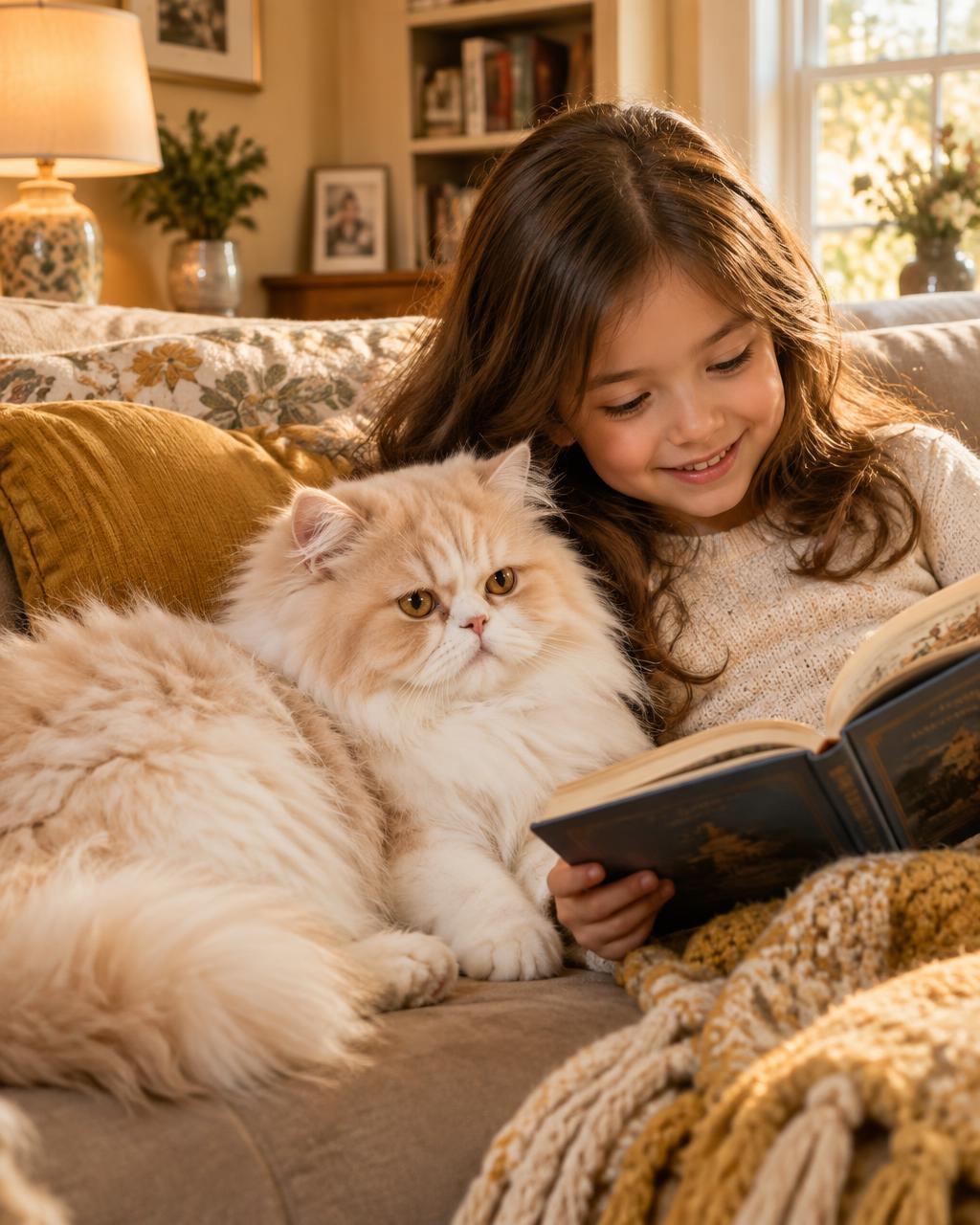
The Persian cat has exactly the sort of temperament families hope for: gentle, patient and rarely aggressive. It's a laid-back companion that enjoys being part of family life without demanding constant attention or causing chaos. A Persian cat is just as happy quietly observing the household from a cosy spot as it is receiving a gentle fuss on the sofa.
Because the Persian cat is calm and undemanding, it fits beautifully into a range of homes — including apartments, houses with children, and homes with older owners. As long as the household is on the peaceful side rather than loud and hectic, the Persian cat makes a loving, low-drama addition to the family.
Yes — the Persian cat is generally very good with children, particularly gentle, respectful ones who understand how to handle a pet kindly. Its patient, placid nature means the Persian cat is unlikely to lash out; if it's had enough, it will simply walk away to a quiet spot rather than scratch or bite.
Older children often make the best companions for a Persian cat, because they can stroke softly, play calmly and respect the Persian cat's need for space. Involving children in gentle grooming and feeding, under supervision, is also a lovely way to help them bond with the family Persian cat and learn responsibility at the same time.
The key is teaching children how to treat the Persian cat: no pulling the coat or tail, no chasing, and no disturbing it while it's sleeping or eating. With those simple rules in place, children and the Persian cat usually form a warm, gentle friendship.
The Persian cat can live happily alongside babies and toddlers, but this is where supervision matters most. Very young children don't yet understand gentle handling, and the Persian cat doesn't enjoy rough treatment such as grabbing, tail-pulling or being chased. Rather than react aggressively, a Persian cat will usually try to escape — so it's important to give it that option.
Always supervise any time a baby or toddler is near the Persian cat, and never leave them alone together. Provide the Persian cat with quiet retreats and high perches it can escape to, keep its food, litter and resting areas away from crawling babies, and teach toddlers to be calm and gentle from the very start. Introduced carefully, a Persian cat and a young child can grow up to be devoted companions.
| Child's age | What to expect & how to help |
|---|---|
| Babies (0–2) | Always supervise. Keep the Persian cat's space and the baby's space separate, and never leave them alone together. |
| Toddlers (2–5) | Teach gentle touching and no chasing. Give the Persian cat easy escape routes and quiet retreats. |
| Children (6–12) | A great match. Involve them in gentle grooming, feeding and calm play under guidance. |
| Teenagers | Can be trusted with more care duties and make wonderful companions for a calm Persian cat. |
The Persian cat's gentle, non-confrontational nature means it usually gets along well with other pets. It tends to accept calm companions rather than compete with them, and it's seldom the one to start trouble in a multi-pet home.
A Persian cat can happily share a home with another feline, especially a fellow calm, easy-going one. Introduce them slowly, give each their own food bowls, litter trays and resting spots, and let them adjust at their own pace.
The Persian cat generally does well with cat-friendly, gentle dogs. A slow, supervised introduction is essential, and the Persian cat should always have safe spaces up high or behind gates where an excitable dog can't follow.
As a naturally low-energy companion, the Persian cat is less likely to pester small pets than a high-prey-drive breed — but it's still wise to keep small animals like rabbits, birds or hamsters safely separated and supervised.

Several qualities make the Persian cat a natural family pet. It's quiet, so it rarely disturbs a household with loud meowing. It's low-energy, so it won't knock things over or race around causing havoc. It's affectionate, offering warm, gentle companionship to every member of the family. And it's adaptable, settling contentedly into apartments and family homes alike, as long as the atmosphere stays calm.
Put simply, the Persian cat gives families a lot of love with very little fuss — one of the biggest reasons it remains such a popular household companion around the world.
As wonderful as the Persian cat is with families, there are a couple of things to weigh up first. Grooming is the main commitment: the Persian cat's long coat needs daily brushing, and its flat face needs regular eye cleaning, so families need to be willing to keep up that routine — see our grooming and coat care guide. The Persian cat also loves calm, so a very loud, chaotic or high-traffic home may not suit it as well.
It's also worth remembering that young children and a Persian cat both need guidance and supervision to get along safely. With a little commitment to grooming and gentle handling, though, the Persian cat rewards a family many times over — our diet and nutrition guide covers the feeding side of that routine.
| Your household | How the Persian cat fits |
|---|---|
| Families with gentle older children | Excellent |
| Homes with babies & toddlers | Good, with supervision |
| First-time owners | Excellent |
| Apartments & small homes | Excellent |
| Seniors & quieter households | Excellent |
| Homes with calm dogs or pets | Good, with slow introductions |
| Busy, loud or chaotic households | Less suitable |
| Owners wanting low grooming | Less suitable |
A few simple habits keep everyone — human and feline — content. Teach children to handle the Persian cat gently and to leave it in peace while it sleeps or eats. Give the Persian cat quiet, safe retreats it can escape to when family life gets busy. Keep grooming, feeding and litter routines consistent so the Persian cat feels secure. Supervise all interactions between the Persian cat and very young children. And make time for calm, gentle play and affection every day. With these in place, the Persian cat becomes a treasured, peaceful member of the family.
The Persian cat is a gentle, affectionate and adaptable companion that fits family life beautifully. It's patient with children, tolerant of other pets, and happiest in a calm, loving home. Commit to its grooming needs and teach children to treat it kindly, and the Persian cat will reward your family with years of quiet devotion and companionship.