
Breed guide
Persian cat moods & body language
Persian cats may be famously calm, but they still experience a full range of moods — from blissfully content to stressed, playful or unwell. Because the Persian cat is such a quiet, subtle communicator, learning to read its moods and body language is one of the most valuable skills an owner can develop. It helps you understand what your Persian cat is feeling, respond to its needs, strengthen your bond, and spot early warning signs when something isn't right. This page is your complete guide to understanding Persian cat moods.

Understanding Persian cat moods
Unlike some noisy, expressive breeds, the Persian cat tends to show how it feels quietly — through gentle body language and small changes in behaviour rather than loud demands. A Persian cat "talks" mostly with its eyes, ears, tail and posture, and through how it chooses to spend its time. Because these signals are subtle, they're easy to miss, but once you know what to look for, your Persian cat's moods become surprisingly clear. Getting to know your Persian cat's usual habits also makes it much easier to notice when something changes.
Signs your Persian cat is happy and content
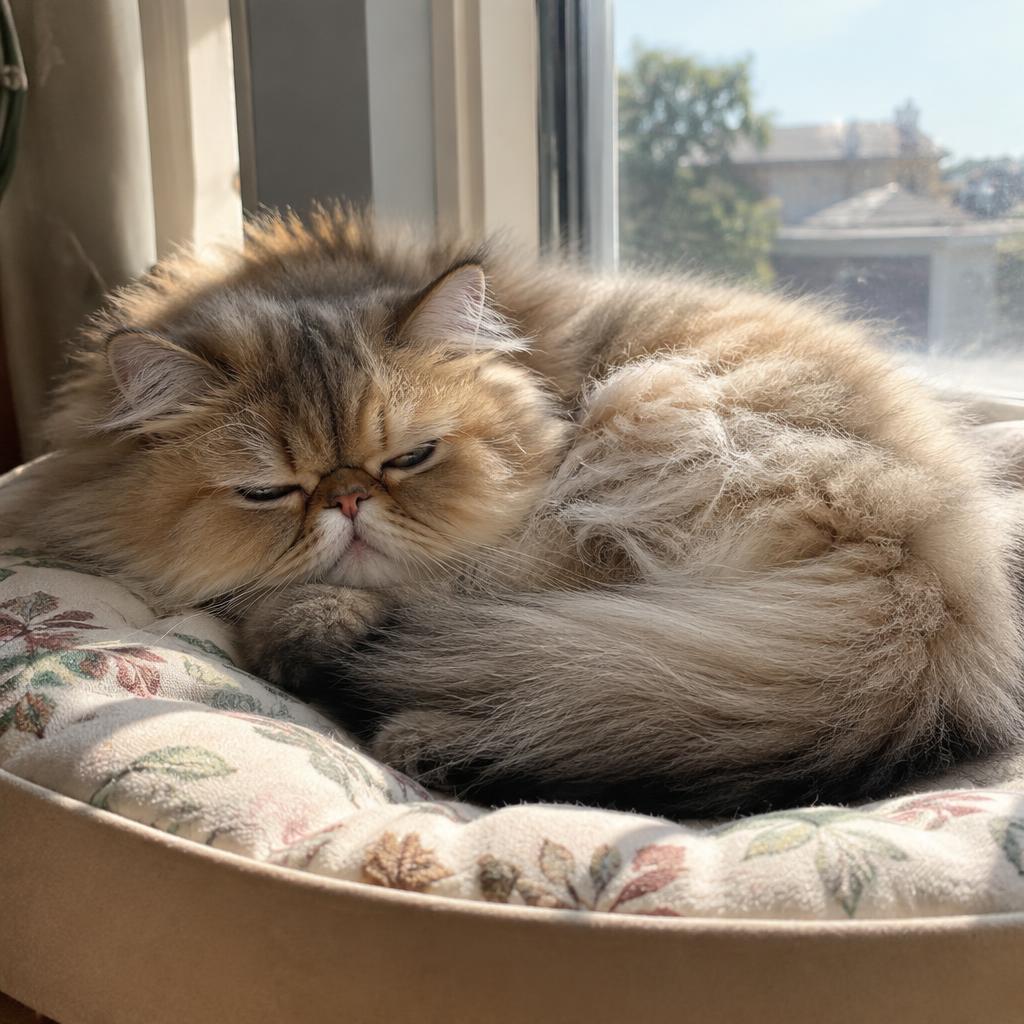
A happy Persian cat is a picture of relaxation. It will rest with a loose, comfortable body, often stretched out or curled in the classic "loaf" position, with its tail carried softly. Contentment shows in slow blinking — a feline sign of trust and affection — along with gentle purring, soft kneading with the paws, and a calm willingness to be near you. A happy Persian cat may greet you with a quiet trill, settle on your lap, or simply doze peacefully in a favourite spot. If your Persian cat seeks out your company and relaxes completely around you, it's feeling safe, secure and content.
Signs your Persian cat is stressed or anxious
Because the Persian cat loves calm and routine, it can become stressed by change or disturbance. A stressed Persian cat may hide away more than usual, grow withdrawn, or — the opposite — become unusually clingy. Other signs include over-grooming (sometimes to the point of bald patches), reduced appetite, avoiding the litter tray, restlessness, or a generally tense, watchful manner. Common causes are loud noise, a house move, new people or pets, or a break in routine. If you spot these signs, look for what might have changed and work to restore a sense of calm and stability for your Persian cat.
Signs your Persian cat is angry or irritated
Even the gentle Persian cat has its limits. An irritated Persian cat will usually warn you before it reacts: its ears may flatten back against its head, its tail may flick or thrash, and its body will look tense. You might hear a low growl or a hiss, and a Persian cat that has truly had enough may swat or move away. These are clear signals to give your Persian cat space. Rather than punishing it, back off calmly — the Persian cat is simply asking to be left alone, and forcing interaction will only make things worse.
Signs your Persian cat is scared or nervous
A frightened Persian cat tries to make itself small and get away. Signs of fear include crouching low to the ground, flattened ears, wide eyes with dilated pupils, a tucked tail, trembling, and a strong urge to hide or escape. Sudden noises, unfamiliar visitors or an unpredictable environment can all frighten a sensitive Persian cat. The best response is to stay calm and quiet, avoid crowding it, and let your Persian cat retreat to a safe, quiet space until it feels secure again. Never corner or force a scared Persian cat.
Signs your Persian cat wants affection or attention
When a Persian cat wants your attention, it asks politely. It might approach and sit near you, rub gently against your legs, offer a soft head-butt, or give a quiet trill or chirp. Some Persian cats will settle on your lap or gaze at you with slow, relaxed blinks. Because the Persian cat is undemanding by nature, these gentle bids for affection are its way of saying it feels close to you — and responding with calm, gentle attention only strengthens the bond you share.
How to read Persian cat body language
Much of a Persian cat's mood is written in its body. Learning to read each part helps you understand the whole picture.
| Signal | What it usually means |
|---|---|
| Eyes | Slow blink = trust and calm; wide with dilated pupils = fear or excitement; a hard stare = tension |
| Ears | Forward and relaxed = content; flattened back = fear or anger; swivelling = alert or unsettled |
| Tail | Softly carried = relaxed; upright with a gentle curve = happy greeting; flicking or thrashing = irritation; tucked = fear |
| Whiskers | Relaxed to the side = calm; pushed forward = alert or curious; pinned back = fear or pain |
| Body posture | Loose and stretched = relaxed; crouched and tense = stressed or scared; hunched = unwell or in pain |
| Voice | Soft trills and chirps = friendly; a gentle meow = a polite request; hiss or growl = "give me space"; loud meowing = stress or a need |
Reading these signals together — rather than one at a time — gives you the clearest sense of how your Persian cat is truly feeling.
Persian cat sounds and what they mean
Although the Persian cat is a quiet breed, it does use its soft voice to communicate. A gentle purr usually means contentment, though felines sometimes purr to comfort themselves when unwell. Soft trills and chirps are friendly greetings or a way of getting your attention, while a quiet meow is often a polite request for food, company or a door to be opened. A hiss or growl is a clear warning to back off. If a normally quiet Persian cat suddenly starts meowing loudly or persistently, it may be stressed, uncomfortable or unwell — and it's worth finding out why.
Persian cat moods at a glance
| Mood | Key signs to look for |
|---|---|
| Happy & content | Relaxed body, slow blinking, purring, kneading, soft tail, seeking your company |
| Stressed or anxious | Hiding, withdrawal or clinginess, over-grooming, reduced appetite, litter-tray avoidance |
| Angry or irritated | Flattened ears, flicking tail, hissing or growling, tense body, swatting |
| Scared or nervous | Crouching low, dilated pupils, ears back, tucked tail, trembling, hiding |
| Unwell or in pain | Sudden withdrawal, appetite change, low energy, hunched posture, grooming changes |
| Wanting affection | Approaching you, head-butts, soft trills, rubbing against you, settling on your lap |
What puts a Persian cat in a bad mood
The Persian cat is sensitive to its surroundings, and several everyday things can sour its mood. Common triggers include loud noise and chaos, changes to routine or environment, a dirty or matted coat, being handled roughly or picked up too often, a dirty litter tray, skipped grooming, unfamiliar people or pets, and being disturbed while resting or eating. Feeling unwell or bored can leave a Persian cat out of sorts too. Because the breed thrives on calm and consistency, keeping life gentle and predictable is the surest way to keep your Persian cat in good spirits.
How to improve your Persian cat's mood
If your Persian cat seems unhappy, small changes can make a big difference. Keep a calm, predictable routine and a peaceful home. Stay on top of grooming so your Persian cat's coat is comfortable and free of mats. Provide quiet, safe retreats where it can rest undisturbed, and keep the litter tray spotless. Offer gentle, short play sessions to prevent boredom, and give affection on your Persian cat's own terms — inviting closeness rather than forcing it. Above all, give a stressed Persian cat time and patience to settle. A content, well-cared-for Persian cat is a calm and affectionate one.
When a mood change means you should see a vet
Sometimes a change in mood is more than a passing feeling — it can be the first sign of illness or pain. Because the Persian cat hides discomfort well, take note if your Persian cat suddenly becomes withdrawn, stops eating, hides for long periods, avoids the litter tray, seems lethargic, sits hunched, over-grooms one spot, or becomes unusually aggressive. Any sudden or lasting change in your Persian cat's normal behaviour is worth a conversation with your vet, who can rule out health problems and help your Persian cat feel like itself again.
Final thoughts
Learning to read your Persian cat's moods and body language makes you a better, more attentive owner. Though the Persian cat expresses itself quietly, its eyes, ears, tail, posture and habits tell you everything you need to know — whether it's happy, stressed, frightened, or simply asking for a cuddle. Tune in to these gentle signals, respond with calm and care, and you'll enjoy an even closer bond with your Persian cat, along with the peace of mind that comes from knowing when it needs a little extra help.