Grooming guide
Persian Cat Grooming: A Simple Daily Routine for a Beautiful Coat
The long, silky coat is what makes the Persian cat so beautiful, but it is also the part that needs the most care. The good news is that Persian cat grooming becomes easy once you follow a simple routine. Here is exactly how to groom your Persian cat at home.
Why grooming is so important for a Persian cat
A Persian cat has a double coat: a soft, dense undercoat and a long outer coat. This fur tangles very easily, especially behind the ears, under the legs, and around the belly. When tangles are not removed, they tighten into mats that pull on the skin and cause pain every time the Persian cat moves.
Grooming is also a wonderful bonding time. A few quiet minutes of brushing each day helps your Persian cat trust you, and it keeps loose fur off your furniture, clothes, and floors.
Tools you need for Persian cat grooming
Before you start, gather the right tools. A wide-tooth metal comb is the most important tool for any Persian cat owner, because it reaches deep into the coat to remove tangles. A fine-tooth comb helps with the face and smaller areas. A soft slicker brush smooths the outer coat, and a pair of feline nail clippers keeps claws short. You will also need a gentle feline shampoo, a soft towel, a hair dryer on a low, cool setting, and cotton pads or a soft cloth for wiping the face.
Daily brushing routine
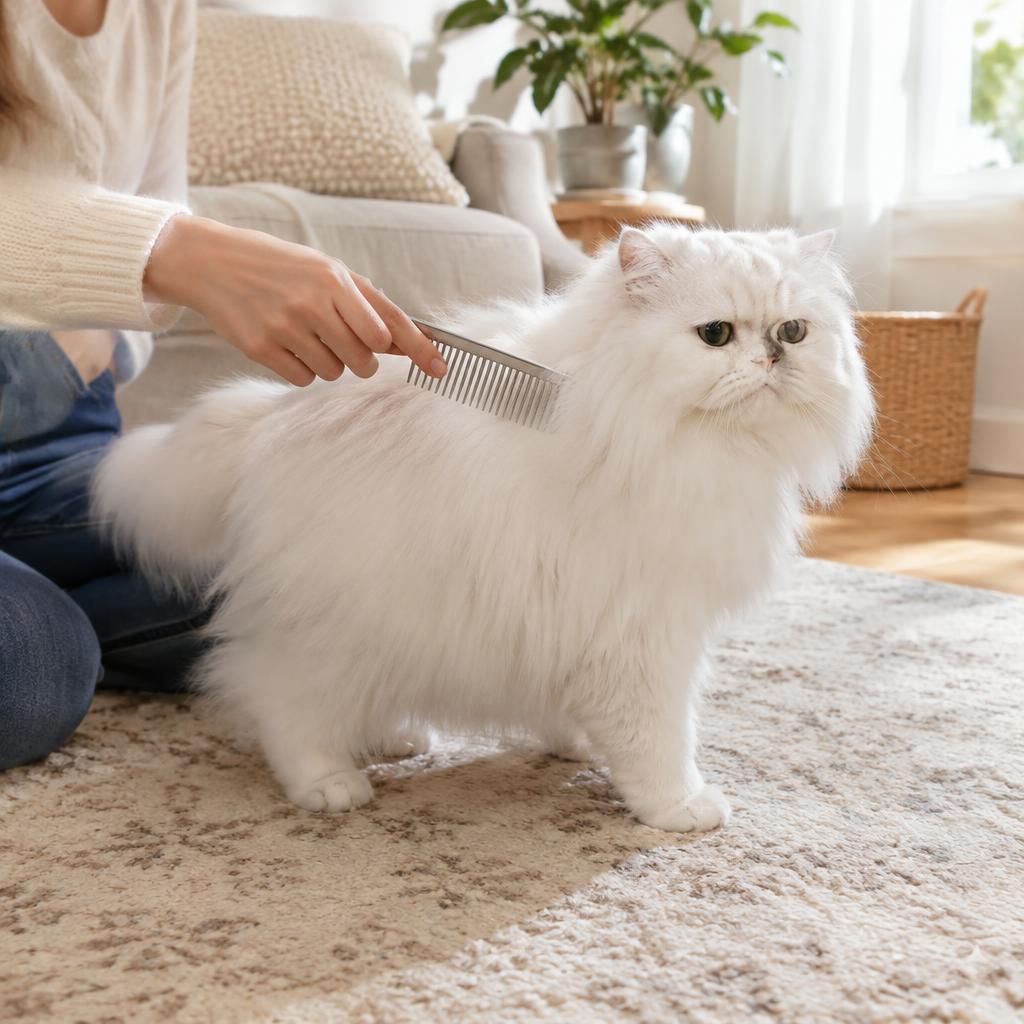
Your Persian cat should be brushed every day for about 10 to 15 minutes. Choose a calm time, such as the evening, when your Persian cat is relaxed.
Start by gently running the wide-tooth comb through the coat in the direction the fur grows. Work in small sections, starting from the back and moving to the sides, chest, and tail. Pay special attention to the areas where mats form most often: behind the ears, under the armpits, the belly, and the back legs.
If you find a small tangle, hold the fur close to the skin so you do not pull, and gently work the tangle apart with your fingers or the tip of the comb. Never pull hard. After combing, use the slicker brush lightly to smooth and fluff the coat.
How to bathe a Persian cat
Most Persian cats need a bath every three to six weeks. Bathing keeps the coat clean, removes extra oil, and makes brushing easier.
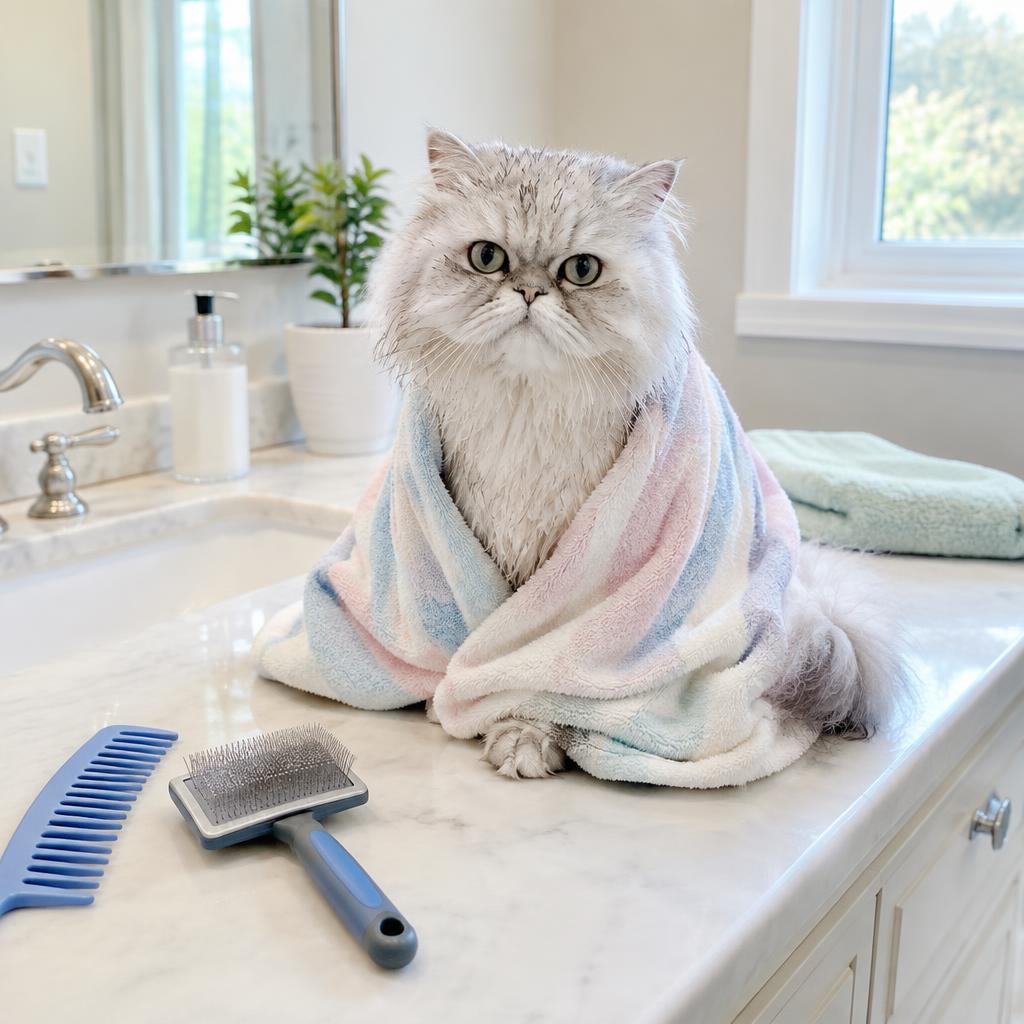
Always comb out all tangles before the bath, because water makes mats tighter. Fill a sink or tub with a few inches of warm water, not hot. Wet your Persian cat slowly, keeping water away from the eyes and ears. Apply feline shampoo, massage it gently into the coat, and then rinse very well. Leftover shampoo can make the coat feel sticky and dull.
Wrap your Persian cat in a towel and pat the fur dry. Then use a hair dryer on a low, cool setting while combing the fur. A Persian cat must be dried completely, because damp fur tangles quickly and keeps your Persian cat cold.
Keeping your Persian cat's face clean
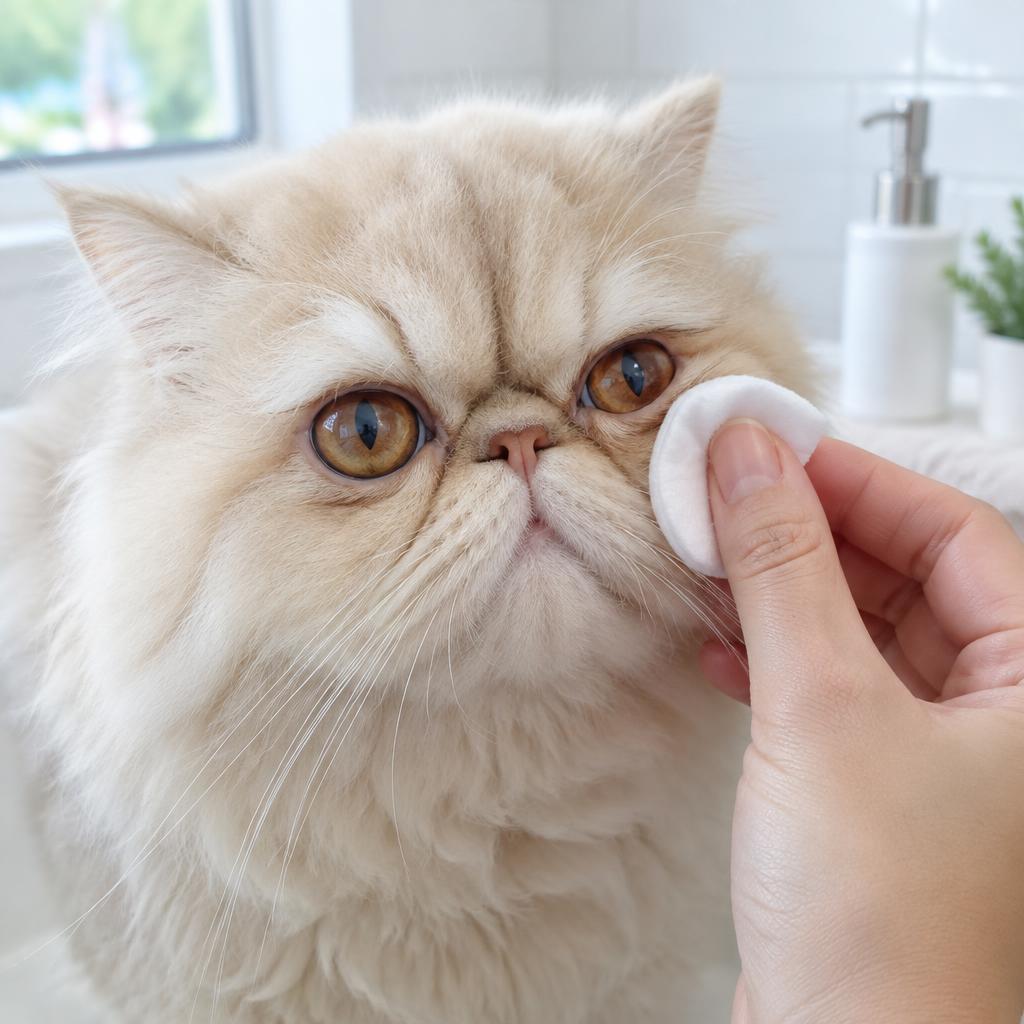
Because of its flat face, a Persian cat often has tear stains, which leave brown marks on the fur under the eyes. Light-colored Persian cats show these stains the most.
Wipe the fur around your Persian cat's eyes once or twice a day with a soft cloth or cotton pad dipped in plain warm water. Wipe gently from the inner corner outward, using a fresh pad for each side. Doing this every day keeps the face looking bright and neat.
Nail trimming and ear care
Trim your Persian cat's nails every two to three weeks. Press gently on the paw to extend each claw, and cut only the sharp white tip. Avoid the pink area inside the nail, called the quick, because it contains blood vessels.
Check the ears once a week. If you see a little dirt around the outer ear, wipe it away gently with a soft cloth. Never push anything deep into the ear.
Keeping the back end clean
Long fur around the tail and back legs can catch litter and waste. This is common in Persian cats and can be uncomfortable for them. Many owners ask a professional groomer to trim this area short, which is often called a “sanitary trim.” Check this area daily and clean it gently when needed.
Should you shave your Persian cat?
Some owners choose a “lion cut” for their Persian cat, especially in hot weather or when the coat is badly matted. Shaving can make care easier, but it should only be done by a professional groomer. Never try to cut out mats with scissors at home, because a Persian cat's skin is thin and easy to cut by accident.
Common grooming mistakes to avoid
Many new owners brush only the top layer of fur, which leaves hidden mats underneath. Others skip grooming for a few days and then struggle with large tangles. Using human shampoo is another mistake; always choose a shampoo made for felines. Finally, forcing a scared Persian cat through a long session can make grooming stressful for both of you. Keep sessions short and positive, and reward your Persian cat with gentle praise and a favorite toy.
Final thoughts
Persian cat grooming may seem like a lot of work at first, but with a daily routine, it quickly becomes a relaxing time to bond with your Persian cat. Regular brushing, gentle bathing, face cleaning, and nail care will keep your Persian cat comfortable and looking beautiful. Start slowly, stay patient, and your Persian cat will soon look forward to its daily grooming time.