
Behaviour
Persian Cats Behavior Problems: Causes and Gentle Solutions
Persian cats are famous for being calm, gentle, and easygoing. Most of the time, they are peaceful companions who enjoy quiet days and soft cuddles. But even the sweetest Persian cat can sometimes show behavior that confuses or worries its owner. Biting, scratching furniture, hiding, going outside the litter box, or meowing at night are all problems that some owners face. The good news is that almost every behavior problem has a cause, and once you understand that cause, you can find a gentle solution. In this guide, we will explore common behavior problems in Persian cats and how to handle them with patience and kindness.
Understanding Why Behavior Problems Happen
Felines do not misbehave to annoy their owners. Every behavior has a reason. A feline may be stressed, bored, scared, in pain, or simply following its natural instincts. Persian cats are especially sensitive to change and love routine, so changes in the home can affect their behavior.
Before trying to fix a problem, ask yourself some questions. Has anything changed recently? Is your feline getting enough play and attention? Is it eating, drinking, and using the litter box normally? Could it be in pain? Sometimes, a behavior change is the first sign of a health problem, so a vet check is always a good first step.
Scratching Furniture
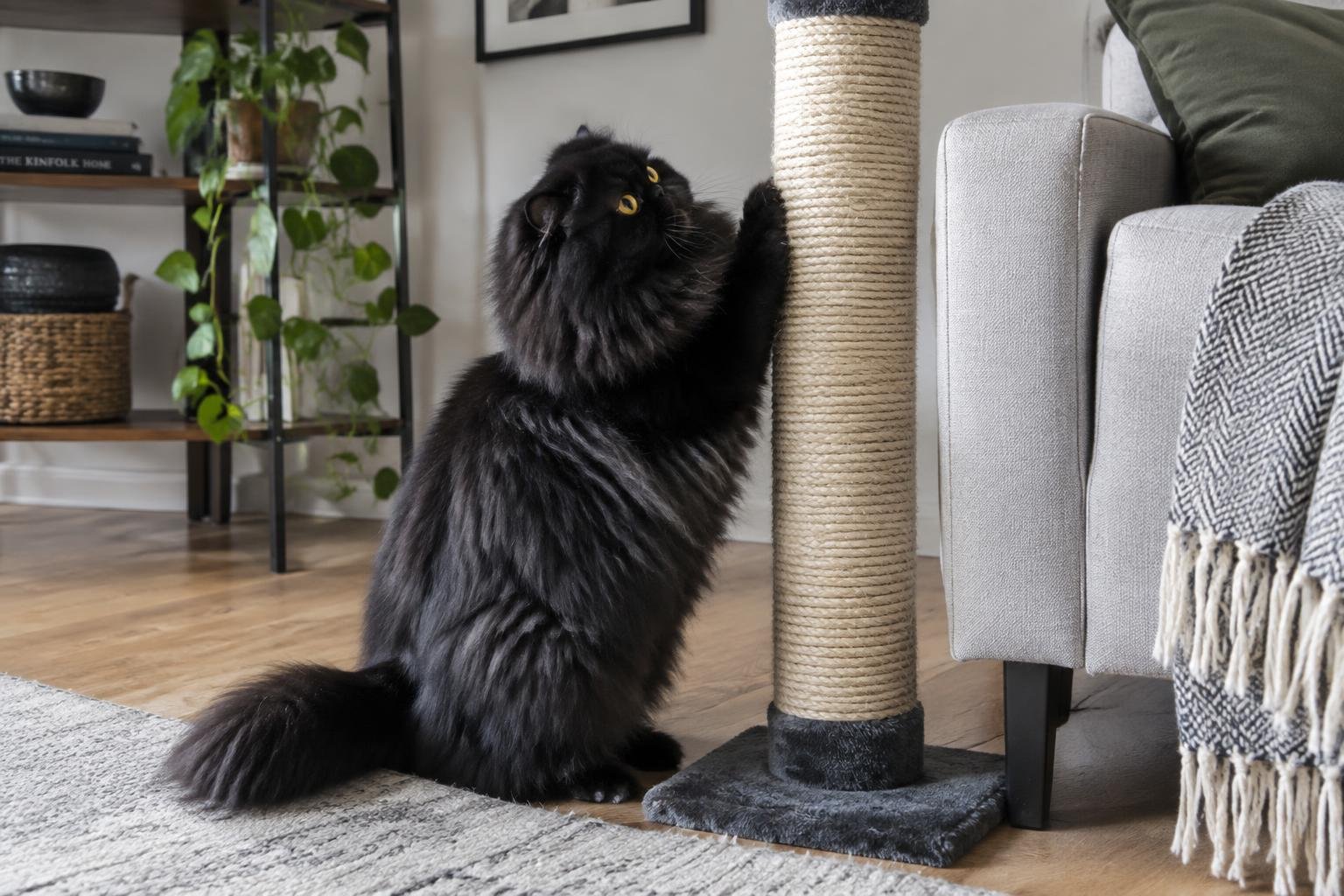
Scratching is a natural and healthy behavior. Felines scratch to keep their claws in good condition, stretch their muscles, and leave their scent. When a Persian cat scratches your sofa, it is not being naughty; it simply has not found a better place to scratch.
To solve this problem, provide attractive scratching posts. Choose a sturdy post that does not wobble and is tall enough for your feline to stretch fully. Some felines prefer vertical posts, while others like horizontal scratching pads. Place scratching posts near the furniture your feline likes to scratch and near its sleeping areas, because felines like to scratch after waking up.
Make the post interesting by rubbing catnip on it or playing with a feather wand near it. Reward your feline whenever it uses the post. You can make furniture less appealing by covering it temporarily with a throw or using double-sided sticky tape made for pets. Keep your feline's nails trimmed to reduce damage. Declawing is not a solution; it is a painful surgery that removes part of the toes and is banned or discouraged in many countries.
Biting and Nipping
Some Persian cats bite or nip during play or while being stroked. Play biting is common in kittens and young felines. They may have learned that hands are toys. To stop this, never use your hands or feet as toys. Instead, use feather wands, soft toys, or kicker toys that keep your hands at a safe distance. If your feline bites during play, stop the game calmly and walk away for a few minutes.
Some felines bite when they are stroked for too long. This is sometimes called "petting-induced aggression." The feline may enjoy stroking at first but becomes overstimulated. Watch for warning signs, such as a flicking tail, twitching skin, flattened ears, or a sudden stillness. When you see these signs, stop stroking and let your feline relax. Many felines prefer short stroking sessions on the head and cheeks rather than long strokes along the back or belly.
A feline that bites suddenly or when touched in a certain area may be in pain. A vet visit can check for problems such as dental disease, arthritis, or skin conditions.
Hiding and Shyness
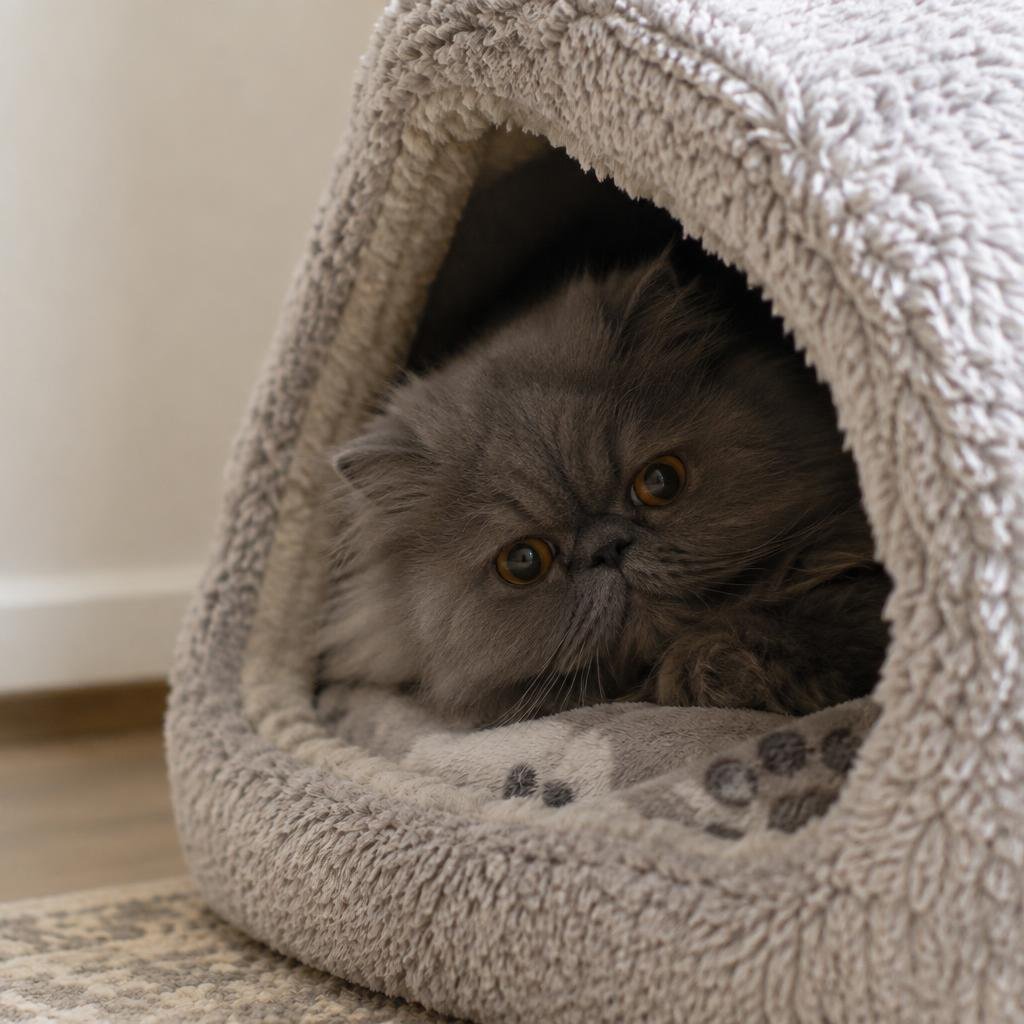
Persian cats are generally calm, but some can be shy, especially around strangers, loud noises, or new environments. Hiding is a normal way for felines to feel safe. If your Persian cat hides, do not pull it out or force it to meet people. Instead, make sure it has safe hiding places, such as a covered bed or a box, and let it come out when it feels ready.
Keep your home calm and quiet, and speak softly. Offer treats and gentle play to build confidence. If your feline suddenly starts hiding much more than usual, especially along with changes in eating or litter box habits, it may be ill and should see a vet.
Litter Box Problems
When a Persian cat urinates or defecates outside the litter box, owners often feel frustrated. But this problem usually has a clear cause. The litter box may be dirty, too small, in a noisy place, or filled with a litter your feline dislikes. Long fur may get dirty during use, making the box uncomfortable. Stress, such as a new pet or a move, can also cause accidents.
Medical problems, including urinary infections, bladder problems, kidney disease, and constipation, are common causes too. Always visit a vet first. Then, make sure the litter box is clean, large, easy to enter, and in a quiet place. Keep your feline's back end trimmed and clean. Clean accidents with an enzyme cleaner to remove the smell.
Night-Time Meowing and Waking You Up
Some Persian cats become active or vocal at night, or wake their owners early in the morning. Felines are naturally most active at dawn and dusk. If your feline sleeps all day while you are at work, it may have extra energy at night.
To help, play with your Persian cat in the evening, before bed. A good play session followed by a meal can help your feline feel tired and satisfied, just like its natural hunt, eat, and sleep cycle. Do not reward night-time meowing with attention or food, because this teaches your feline that meowing works. An automatic feeder set for early morning can stop your feline from waking you for breakfast.
In older felines, increased night-time vocalization can be a sign of health problems, such as high blood pressure, thyroid problems, hearing loss, or age-related confusion. A vet visit is a good idea if this behavior is new.
Over-Grooming
Felines groom themselves to stay clean, but some felines lick or chew their fur so much that they create bald patches or sore skin. Over-grooming can be caused by skin problems, fleas, allergies, pain, or stress. In Persian cats, mats pulling on the skin may also cause discomfort and excessive licking.
If you notice over-grooming, visit your vet to check for medical causes. Keep your feline's coat free of mats, reduce stress in the home, and offer daily play and enrichment.
Aggression Toward Other Pets
Sometimes Persian cats hiss, swat, or chase other pets. This is often caused by fear, stress, or competition for resources such as food, litter boxes, and resting places. Make sure each pet has its own food bowl, water, litter box, and resting area. If the problem started after a new pet arrived, go back to a slower introduction, keeping the animals separated and slowly reintroducing them with positive experiences such as treats and play.
Stress and Anxiety
Many behavior problems in Persian cats are linked to stress. Common causes include moving house, new family members, new pets, loud noises, changes in routine, and building work. Signs of stress include hiding, less appetite, over-grooming, litter box problems, and increased vocalization.
To reduce stress, keep a steady daily routine, provide quiet resting areas, and give your feline choices, such as high and low spots and places to hide. Synthetic feline pheromone diffusers may help some felines feel calmer. Spend quiet time with your feline each day.
Boredom
Indoor Persian cats can become bored if their environment offers nothing to do. Boredom may lead to scratching, attention-seeking, over-eating, or over-grooming. Provide toys, puzzle feeders, a window perch, and daily play sessions. Rotate toys to keep them interesting.
When to Get Professional Help
If a behavior problem continues despite your efforts, or if it appears suddenly, talk to your vet. Your vet can check for health issues and may refer you to a qualified animal behaviorist. Never use punishment, because it increases fear and makes most behavior problems worse.
Conclusion
Behavior problems in Persian cats can be challenging, but they are usually solvable. Most problems come from natural instincts, stress, boredom, or pain. By understanding the reason behind the behavior, providing the right environment, rewarding good habits, and seeking vet advice when needed, you can help your Persian cat become happier and more relaxed. With patience and kindness, you can build a peaceful home where both you and your Persian cat feel safe and content.