
Dental care
Persian Cats Dental Care: How to Keep Your Feline's Teeth and Gums Healthy
When people think about caring for Persian cats, they usually think about brushing that long, beautiful coat. But there is another kind of brushing that is just as important: brushing your feline's teeth. Dental problems are very common in felines, and Persian cats have a special face shape that makes them even more likely to have trouble with their teeth and gums. Poor dental health can cause pain, bad breath, and even problems in other parts of the body. In this guide, you will learn why dental care matters for Persian cats, how to brush your feline's teeth at home, and how to spot dental problems early.

Why Persian Cats Are Prone to Dental Problems
Persian cats have a short, flat face, which is called a brachycephalic face. While this gives them their famous sweet look, it also means their jaws are shorter than those of many other felines. However, they still have the same number of teeth, usually 30 adult teeth. With less space, the teeth are often crowded together, twisted, or placed at unusual angles.
Crowded teeth leave small spaces where food and bacteria can collect. This leads to plaque, a soft, sticky layer on the teeth. If plaque is not removed, it hardens into tartar, which is yellow or brown and sticks firmly to the teeth. Tartar can push the gums away from the teeth and lead to gum disease.
Some Persian cats also have a "malocclusion," which means the upper and lower teeth do not meet correctly. In some cases, teeth can poke into the gums or the roof of the mouth, causing discomfort.
Common Dental Problems in Persian Cats
Gingivitis is inflammation of the gums. It causes a red line along the gum edge, swelling, and sometimes bleeding. Gingivitis is often the first stage of gum disease and can usually be improved with good care.
Periodontal disease is a more serious form of gum disease. It affects the gums, bone, and tissues that hold the teeth in place. Over time, it can lead to pain, loose teeth, and tooth loss. Bacteria from the mouth may also affect other organs, such as the heart and kidneys.
Tooth resorption is a common and painful condition in felines, where the tooth structure slowly breaks down. It often starts below the gum line and can be hard to see without X-rays.
Broken teeth, retained baby teeth, and mouth inflammation can also occur. Because felines hide pain so well, many owners do not realize their feline has a dental problem until it becomes serious.
Signs of Dental Problems in Persian Cats
Watch for these signs that your Persian cat may have a dental problem. Bad breath is one of the most common signs. You may also see red, swollen, or bleeding gums, yellow or brown tartar on the teeth, or loose or missing teeth.
Your feline may drool, paw at its mouth, drop food while eating, chew on one side only, or prefer soft food over dry food. Some felines eat less or lose weight. Others may stop grooming properly, which can quickly lead to mats in a Persian cat's long coat. Changes in behavior, such as hiding or irritability, may also be signs of mouth pain. If you notice any of these signs, visit your vet.
Start Dental Care Early
The best time to start dental care is when your Persian cat is a kitten. Kittens lose their baby teeth and grow adult teeth at around three to six months of age. Gently touching your kitten's mouth and lips during cuddle time helps it get used to having its mouth handled. Once the adult teeth are in, you can begin a regular toothbrushing routine. Adult felines can also learn to accept toothbrushing, but it may take more time and patience.
Tools for Brushing Your Persian Cat's Teeth
You will need a toothbrush made for felines, which has a small head and soft bristles, or a finger brush that fits over your fingertip. Some owners start with a soft cloth or gauze wrapped around a finger.
You will also need toothpaste made for felines. Never use human toothpaste, because it often contains ingredients such as fluoride and certain sweeteners that are harmful if swallowed. Felines cannot spit out toothpaste, so they must use a safe, swallowable product. Feline toothpaste comes in flavors felines enjoy, such as chicken or fish.
How to Brush Your Persian Cat's Teeth Step by Step
Start slowly and keep each session short and positive. Choose a calm time when your feline is relaxed.
First, let your feline taste a little feline toothpaste from your finger. Do this for a few days so your feline learns that the toothpaste is a treat.
Next, gently lift your feline's upper lip and touch the teeth and gums with your finger. Give praise and a small reward.
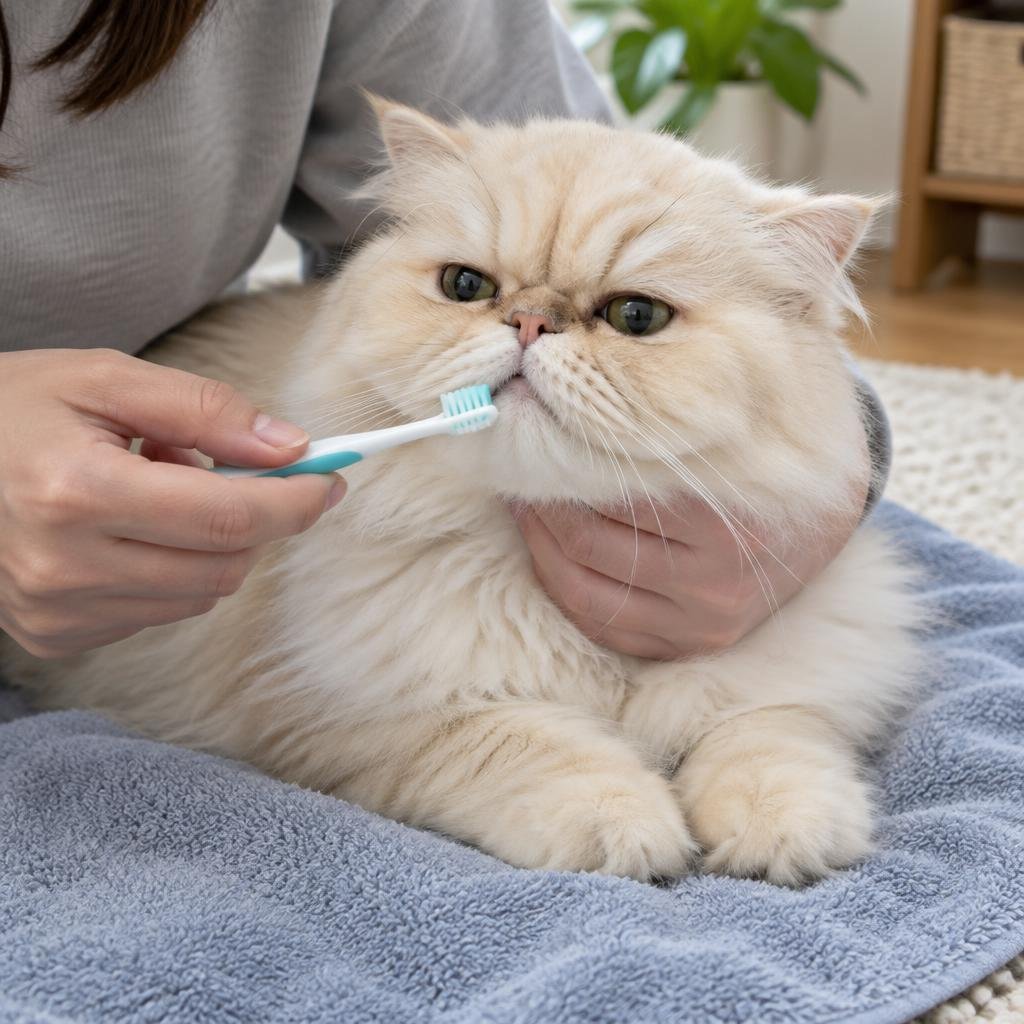
When your feline is comfortable, put a little toothpaste on the toothbrush or finger brush. Lift the lip and gently brush the outer surfaces of the teeth using small circular movements, focusing on the gum line. Start with the front teeth and slowly move to the back teeth. You do not need to brush the inside surfaces, because the feline's tongue helps clean those areas.
Aim for about 30 seconds per side at first, and slowly build up time as your feline accepts it. Because Persian cats have small, flat faces, be extra gentle and patient. End each session with praise, a treat, or playtime.
How Often Should You Brush?
Daily brushing is best, because plaque forms quickly. If daily brushing is not possible, try to brush at least three times a week. Even a small amount of regular brushing is much better than none.
Other Ways to Support Dental Health
Toothbrushing is the gold standard, but other products can help. Dental treats and dental diets are designed to help reduce plaque and tartar as the feline chews. Look for products that are proven to work, and ask your vet for recommendations. Because Persian cats have flat faces, choose kibble or treats that are easy for them to pick up and chew.
Water additives and dental gels are also available, though they generally work best alongside brushing. Chew toys made for felines may help some felines, but many Persian cats are not heavy chewers.
Professional Dental Cleaning
Even with good home care, many Persian cats will need professional dental cleaning at some point. During a professional cleaning, the vet gives your feline a general anesthetic, examines each tooth, takes X-rays if needed, removes tartar above and below the gum line, and polishes the teeth. If a tooth is badly damaged or painful, the vet may need to remove it.
Anesthesia is necessary because a full cleaning below the gum line cannot be done safely or properly on an awake feline. Your vet will check your feline's health before the procedure and explain any risks. Flat-faced felines may need extra care during anesthesia, so choose a vet experienced with brachycephalic breeds.
Regular Vet Check-Ups
Your vet should check your Persian cat's teeth at every health check-up, at least once a year. Senior felines may need more frequent dental checks. Your vet can spot early signs of dental disease, recommend a cleaning schedule, and give you tips for home care.
Diet and Dental Health
A healthy, balanced diet supports overall health, including the mouth. Some owners believe dry food cleans the teeth, but regular kibble often breaks apart without scrubbing the teeth much. Special dental diets are designed differently to help clean teeth. Whether your feline eats wet food, dry food, or both, toothbrushing and vet check-ups remain important.
Conclusion
Dental care is an important but often forgotten part of caring for Persian cats. Because of their short, flat faces, Persian cats often have crowded teeth that collect plaque and tartar easily. By brushing your feline's teeth regularly with feline toothpaste, offering dental-friendly foods and treats, watching for warning signs, and visiting your vet for check-ups and cleanings, you can help your Persian cat keep a healthy, comfortable mouth. A healthy mouth means a happier feline, fresher breath, and a better chance at a long and healthy life.