Eye care
Persian Cats Eye Care: How to Clean Eyes and Remove Tear Stains Safely
Big, round, expressive eyes are one of the most charming features of Persian cats. Whether they are copper, green, blue, or odd-eyed, those eyes give Persian cats their sweet, gentle look. But these beautiful eyes also need special care. Many Persian cats have watery eyes and brown tear stains under the eyes, and some are more likely to develop eye infections or injuries. In this complete guide, you will learn why Persian cats have eye problems, how to clean their eyes safely every day, how to reduce tear stains, and when you should visit a vet.
Why Persian Cats Have Watery Eyes
In most felines, tears are made to keep the eye moist and clean. The tears then drain away through small tubes called tear ducts, which run from the inner corner of the eye to the nose. In Persian cats, especially those with very flat faces, these tear ducts are often short, narrow, or bent. Because of this, tears cannot drain properly and instead spill over the edge of the eyelid onto the face. This overflow of tears is called "epiphora."
The shape of the face also plays a role. Persian cats have large, slightly prominent eyes and shallow eye sockets, so the eyes are more exposed. Some Persian cats also have folds of skin near the nose that can press hair against the eye or trap moisture. All of this means that many Persian cats have some tearing every day, even when they are healthy.
What Are Tear Stains?
Tear stains are the brown, red, or rusty marks that appear on the fur under the eyes of many Persian cats. Tears contain natural substances called porphyrins, which turn reddish-brown when they are exposed to air and light. When tears constantly wet the fur, these substances build up and stain the hair.
Tear stains are most noticeable on white, cream, silver, and other light-colored Persian cats, but they happen in felines of every color. The damp fur can also become a home for yeast and bacteria, which may darken the stains and sometimes cause a bad smell or sore skin. This is why daily cleaning is so important.
Tools for Cleaning Your Persian Cat's Eyes
You do not need many tools to care for your Persian cat's eyes. Soft cotton pads, clean soft cloths, or gauze squares work well. Use plain, lukewarm water that has been boiled and cooled, or a gentle eye-cleaning solution made for felines that your vet recommends. A fine-tooth comb or small flea comb helps remove dried crust from the fur. A soft, dry towel or tissue is useful for drying the area after cleaning.
Avoid using cotton balls that shed small fibers into the eye. Never use human eye drops, makeup remover, soap, or other human products around your feline's eyes unless your vet specifically tells you to.
How to Clean Your Persian Cat's Eyes Step by Step
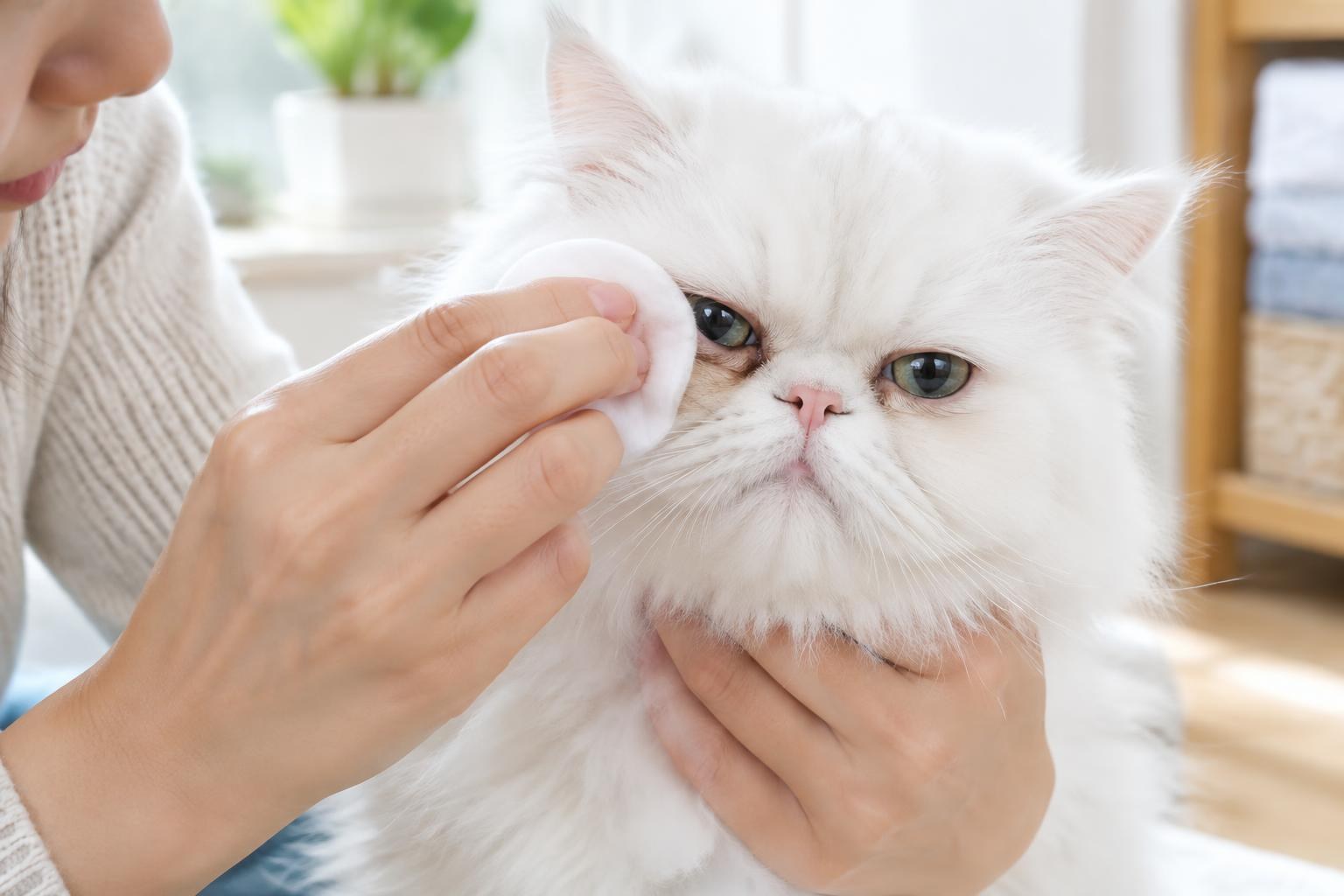
Choose a quiet time when your Persian cat is calm and relaxed, such as after a meal or during an evening cuddle. Sit on the floor or place your feline on your lap, and gently hold its head with one hand.
Dip a cotton pad or soft cloth into lukewarm water and squeeze out the extra water so it is damp but not dripping. Gently wipe from the inner corner of the eye, near the nose, outward and downward along the tear stain. Do not rub or press on the eyeball itself. Use a new, clean pad for each eye, so that you do not spread any germs from one eye to the other.
If there is dried crust, hold the damp pad against it for a few seconds to soften it. Then gently wipe it away or carefully comb it out with a fine-tooth comb. Finally, dry the fur under the eyes with a soft, dry cloth or tissue. Keeping this area dry is one of the best ways to reduce staining.
Finish by giving your feline praise and a small treat. This helps your Persian cat learn that eye cleaning is a pleasant part of its day.
How Often Should You Clean Your Persian Cat's Eyes?
Most Persian cats need their eyes cleaned once or twice a day. Felines with very flat faces or heavy tearing may need cleaning more often. The key is consistency. Cleaning a little every day is much easier and more comfortable for your feline than trying to remove thick, dried stains once a week.
Tips to Reduce Tear Stains
While you may not be able to stop tearing completely, there are several ways to reduce tear stains in Persian cats. Clean and dry the area under the eyes every day, because dry fur stains less. Keep the fur around the eyes neat. A professional groomer can carefully trim hair that pokes into the eyes; never use scissors near your feline's eyes yourself.
Some owners notice fewer stains when they give their feline filtered water and use stainless steel or ceramic bowls instead of plastic ones, which can hold bacteria. A healthy, balanced diet supports overall health, including the skin and coat. Keep your home clean and reduce dust and smoke, which can irritate the eyes.
Be careful with tear stain products sold in shops. Some can irritate the eyes, and some powders or supplements contain ingredients that are not suitable for long-term use. Always ask your vet before using any tear stain remover, supplement, or medicine.
Common Eye Problems in Persian Cats
Besides normal tearing, Persian cats can develop some eye conditions that need a vet's attention.
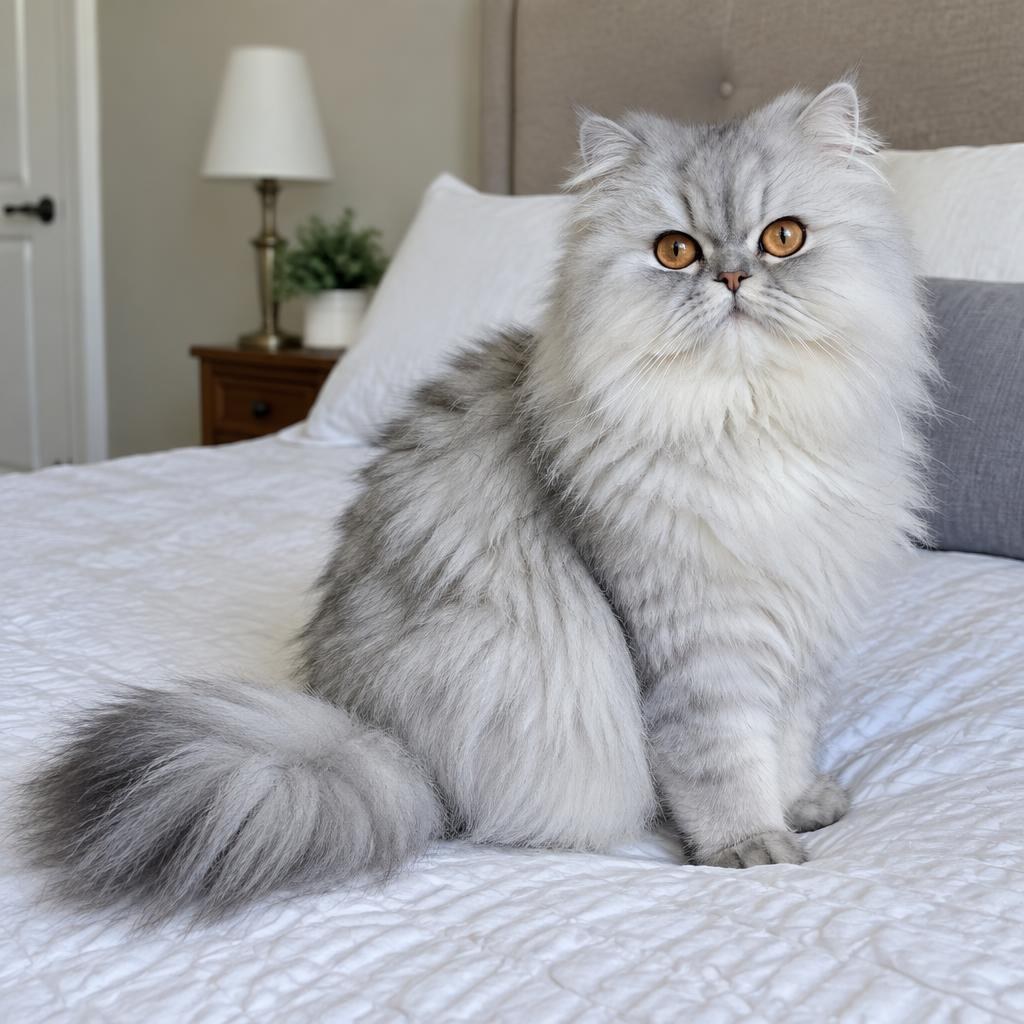
Conjunctivitis is inflammation of the pink tissue around the eye. It can cause redness, swelling, and discharge. It may be caused by infection, allergies, or irritation.
Entropion happens when the eyelid rolls inward, causing the eyelashes and hair to rub against the eye. This is uncomfortable and can damage the eye's surface. It is sometimes seen in flat-faced breeds and may need surgery.
Corneal ulcers are scratches or sores on the clear surface of the eye. Because Persian cats' eyes are large and exposed, they can be injured more easily. Ulcers are painful and need quick treatment.
Corneal sequestrum is a condition where a brown or black spot forms on the surface of the eye. It is seen more often in Persian cats and some related breeds and usually needs vet care.
Persian cats can also be affected by eye infections caused by viruses, such as feline herpesvirus, which may cause repeated flare-ups of watery eyes, sneezing, and discharge.
Warning Signs That Need a Vet Visit
Normal tearing in Persian cats is usually clear and does not bother the feline. You should contact a vet if you notice thick yellow, green, or cloudy discharge; red or swollen eyes; squinting or keeping one eye closed; pawing or rubbing at the eye; a cloudy or blue look on the eye; a dark spot on the eye; a sudden increase in tearing; or a change in pupil size. Also see a vet if the skin under the eye becomes red, sore, smelly, or loses fur.
Eye problems can get worse very quickly and may even threaten your feline's sight, so it is always better to act early. Do not try to treat eye problems at home with old medicine or human products.
Doll Face vs Flat Face Persian Cats and Eye Health
Persian cats with a more traditional "doll face" usually have slightly longer noses and better tear drainage than those with a very flat "peke-face" look. Because of this, doll face Persian cats may have fewer tear stains and eye problems, though they still need regular care. If you are choosing a kitten and are worried about eye health, talk to the breeder about the face type and the eye health of the parents.
Making Eye Care a Happy Routine
Many Persian cats accept eye cleaning easily if they learn it from a young age. Start gently when your feline is a kitten, and keep sessions short and calm. Speak softly, move slowly, and always give a reward afterward. If your feline becomes upset, stop and try again later. Over time, eye cleaning can become a gentle bonding moment that your Persian cat actually enjoys.
Conclusion
Eye care is an important part of loving Persian cats. Because of their flat faces and large eyes, many Persian cats have watery eyes and tear stains, but a simple daily routine can keep their faces clean, dry, and comfortable. Wipe gently from the inner corner outward, use a fresh pad for each eye, keep the fur dry, and watch for any signs of infection or injury. With regular care and quick vet visits when needed, your Persian cat's beautiful eyes will stay bright and healthy for years to come.