Hairballs
Persian Cats and Hairballs: Causes, Prevention, and When to Worry
If you share your home with Persian cats, you may have heard that strange coughing, gagging sound followed by a small, wet clump of fur on the floor. This is a hairball. Because Persian cats have such long, thick coats, they are more likely than many other breeds to develop hairballs. While an occasional hairball is usually not a cause for alarm, frequent hairballs can make your feline uncomfortable and, in rare cases, lead to serious problems. In this guide, you will learn why Persian cats get hairballs, how to prevent them, and when you should call your vet.
What Is a Hairball?
A hairball is a collection of fur that builds up in a feline's stomach. Felines groom themselves by licking their fur. Their tongues are covered with tiny, backward-facing hooks that catch loose hair. Because these hooks face backward, the feline usually swallows the hair it collects.
Most of this swallowed fur passes through the digestive system and comes out in the stool. But sometimes, the fur collects in the stomach and forms a clump. When the clump becomes too large to pass, the feline brings it up by vomiting. Although they are called "hairballs," they are usually long and tube-shaped, because they pass through the narrow food pipe on the way out.
Why Persian Cats Get More Hairballs
Persian cats have one of the longest and thickest coats of any breed. They have a dense undercoat and a long outer coat, and both layers shed. The more loose fur a feline has, the more it swallows during grooming. Long hairs are also more likely to tangle together in the stomach.
Seasonal shedding increases the problem. In spring and autumn, when many Persian cats shed more heavily, hairballs may become more common. Stress, skin problems, and over-grooming can also increase the amount of fur a feline swallows.
Signs of Hairballs
The most common sign is coughing, gagging, or retching, followed by vomiting a clump of fur. Some felines bring up the hairball quickly, while others gag for a while. It is normal for this to happen occasionally.
Other signs that hairballs may be causing problems include repeated gagging without producing anything, vomiting several times, loss of appetite, constipation or small, hard stools, a swollen or painful belly, and low energy. Some felines may also have stools that contain a lot of hair.
When Hairballs Become Dangerous
In rare cases, a hairball can become too large to vomit up and too large to pass through the intestines. This can cause a blockage, which is a medical emergency. Signs of a possible blockage include repeated vomiting, trying to vomit without bringing anything up, refusing food, not passing stool, a tight or painful belly, hiding, and weakness.
If your Persian cat shows these signs, contact your vet immediately. A blockage may need treatment such as fluids, medicine, or even surgery.
It is also important to remember that coughing in felines can have other causes, such as asthma, which may look similar to hairball gagging. If your feline coughs often but never brings up a hairball, see your vet.
How Often Is Too Often?
Many vets consider an occasional hairball, perhaps once every week or two or less, to be common in long-haired felines. However, frequent hairballs are not something to simply accept. If your Persian cat brings up hairballs several times a week, vomits often, or seems unwell, talk to your vet. Frequent vomiting can be a sign of other digestive problems, such as food sensitivities or inflammatory bowel disease.
Daily Brushing: The Best Prevention
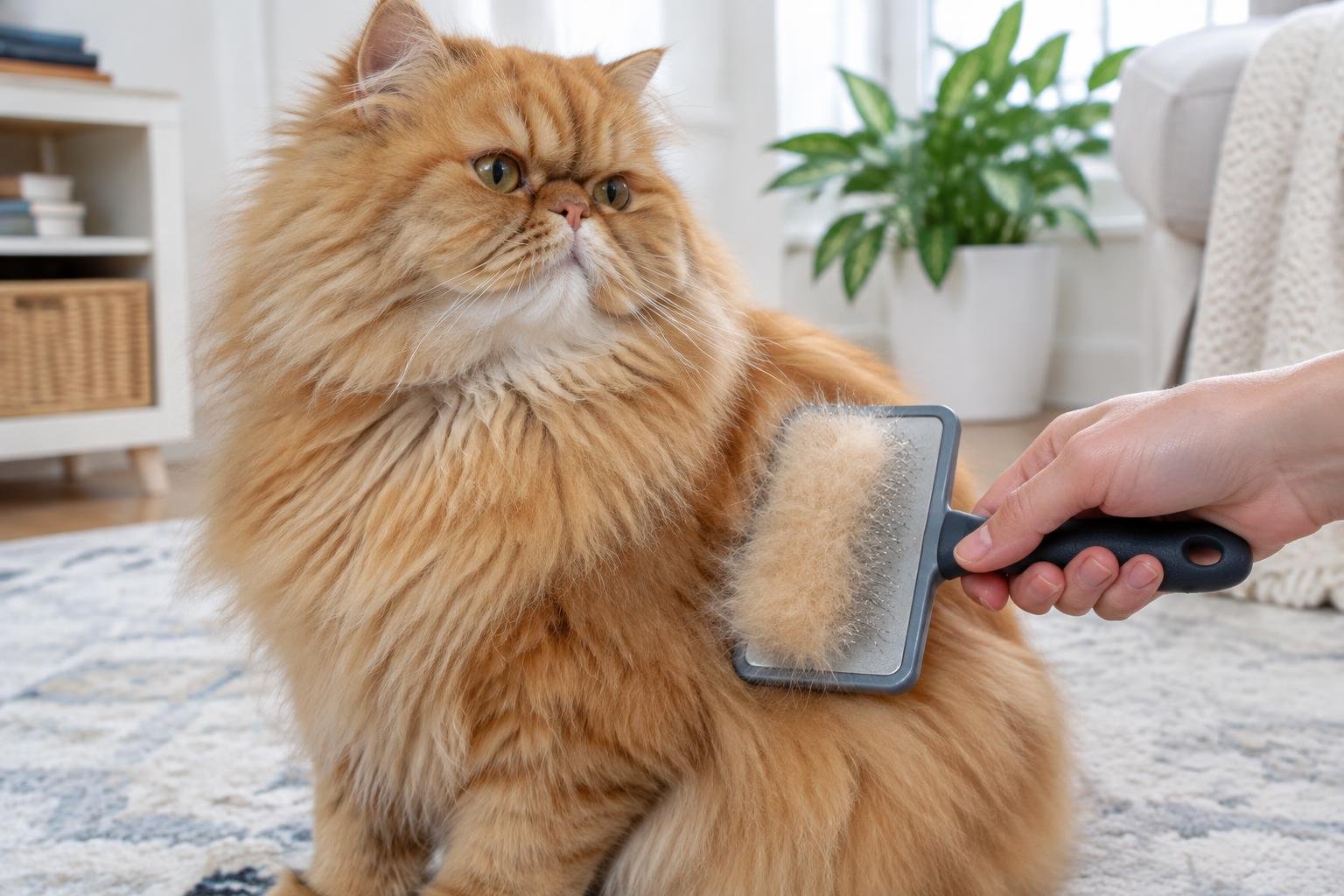
The most effective way to prevent hairballs in Persian cats is daily brushing. Every hair you remove with a comb or brush is a hair your feline will not swallow. Use a wide-tooth metal comb to reach deep into the undercoat, followed by a fine-tooth comb and a soft brush. During heavy shedding seasons, brushing twice a day can make a big difference.
Regular baths and professional grooming can also help remove loose undercoat. Some owners choose a shorter trim for their Persian cats, which greatly reduces the amount of fur swallowed.
Diet and Hairball Control
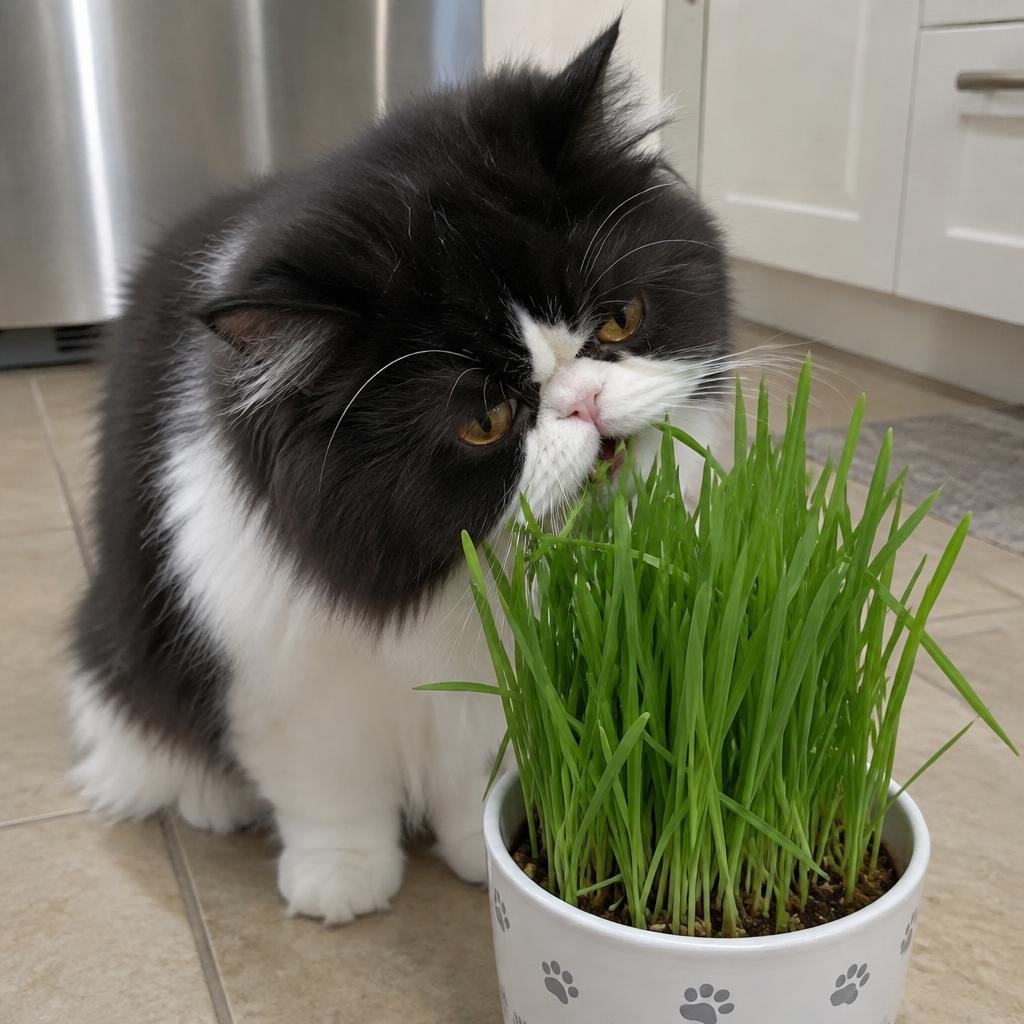
What your Persian cat eats can affect hairballs. Fiber helps move hair through the digestive system, so it passes in the stool instead of forming a clump in the stomach. Many feline food brands make "hairball control" formulas, which contain extra fiber and nutrients that support healthy skin and coat. Some foods made specifically for Persian cats also include hairball support.
A healthy coat sheds less, so a diet with good protein and healthy fats, such as omega-3 fatty acids, can help. If you change your feline's food, do it slowly over one to two weeks.
Keep Your Persian Cat Hydrated
Water helps keep the digestive system moving smoothly. Felines that do not drink enough water may be more likely to have constipation and hairball problems. Keep fresh water available at all times, and place bowls in several places around your home. Many Persian cats prefer wide, shallow bowls or a water fountain. Adding wet food to your feline's diet is an easy way to increase water intake.
Hairball Remedies
There are several hairball remedies available, such as gels and pastes that act as lubricants to help hair pass through the digestive system. Hairball treats are also available. These products may help some felines, but they should be used as your vet advises. Some remedies should not be used too often, because they may affect how nutrients are absorbed.
Do not give your feline human laxatives, mineral oil, or home remedies without your vet's advice. Some substances can be dangerous if the feline breathes them in or if they are given in the wrong amounts.
Reduce Over-Grooming
Some Persian cats groom too much because of stress, boredom, skin irritation, or fleas. Over-grooming means more swallowed fur and more hairballs. Keep your feline free of fleas with a vet-recommended product, and keep the coat free of mats that may pull on the skin.
Give your Persian cat plenty of daily play and enrichment, such as feather wands, puzzle feeders, and window perches. A calm, predictable routine also helps reduce stress-related grooming.
Encourage Gentle Exercise
Exercise helps keep the digestive system healthy. Persian cats are calm and not very active, but they still benefit from short daily play sessions. Gentle play encourages movement, supports a healthy weight, and helps prevent constipation.
What to Do When Your Feline Has a Hairball
If your Persian cat brings up a hairball, clean it up and watch your feline for the next few hours. If it eats, drinks, and behaves normally, there is usually no need to worry. Note how often hairballs happen, so you can tell your vet if they become frequent. If your feline continues vomiting or seems unwell, contact your vet.
Conclusion
Hairballs are common in Persian cats because of their long, thick, beautiful coats, but they do not have to be a regular part of life. Daily brushing, a high-quality diet with enough fiber, good hydration, gentle exercise, and stress reduction can greatly reduce hairballs. Learn the warning signs of a blockage and contact your vet if your feline vomits often, stops eating, or cannot pass stool. With good care, your Persian cat can stay comfortable, healthy, and hairball-free most of the time.