
Litter box guide
Persian Cats Litter Box Guide: Best Litter, Setup, and Solving Common Problems
A clean, comfortable litter box is one of the most important parts of caring for Persian cats. It may not be the most exciting topic, but good litter box habits make life happier and cleaner for both you and your feline. Persian cats have long fur, flat faces, and a love for cleanliness, so they have some special needs when it comes to the litter box. In this complete guide, you will learn how to choose the right litter box and litter, where to place it, how to keep it clean, and what to do if your Persian cat starts having litter box problems.
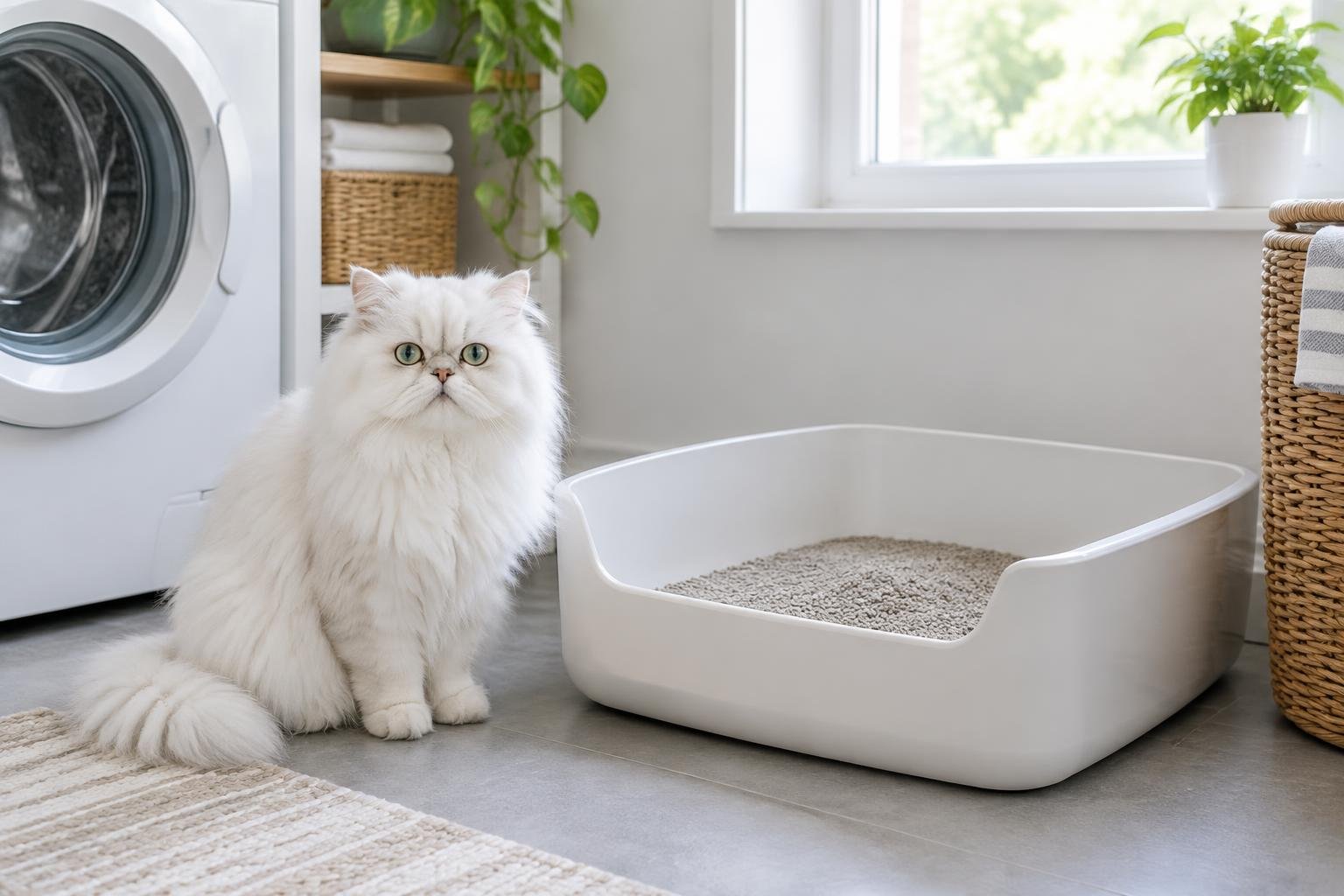
Why Litter Box Care Is Special for Persian Cats
Persian cats are clean and tidy animals, and they can be quite particular about their bathroom habits. A dirty or uncomfortable litter box may cause a Persian cat to avoid it and go somewhere else in the house.
Their long fur also creates special challenges. Litter can stick to the fur on the paws, legs, and back end, and waste can get caught in the long hair around the tail. This is uncomfortable for the feline and can lead to litter being carried around the house. Choosing the right box and litter, along with regular grooming, helps prevent these problems.
Choosing the Right Litter Box
The best litter box for Persian cats is large, sturdy, and easy to enter. A good rule is that the box should be about one and a half times the length of your feline's body, from nose to the base of the tail. This gives your feline plenty of space to turn around, dig, and position itself comfortably.
Many Persian cats prefer boxes with low sides or a low entry point, especially kittens and older felines. If your feline kicks litter out of the box, you can choose a box with high sides but a low entry at the front.
Covered litter boxes can reduce litter scatter and smell for humans, but some felines dislike them, because the smell stays trapped inside and the space feels small. Flat-faced Persian cats may find strong smells inside a covered box especially unpleasant. If you choose a covered box, keep it very clean and watch whether your feline uses it happily. Many Persian cats do best with a large, open box.
Self-cleaning litter boxes are available, but some felines are frightened by the noise and movement. If you want to try one, introduce it slowly and keep a regular box available as well.
Choosing the Best Litter for Persian Cats
The right litter can make a big difference for Persian cats. Look for a litter that is soft, low-dust, and does not stick easily to long fur.
Clumping clay litter is popular because it forms solid clumps that are easy to scoop. However, some fine clumping litters can stick to long hair and paws. Low-dust, unscented clumping litter with medium-sized granules often works well.
Pellet litters, made from materials such as recycled paper or wood, are larger and less likely to stick to fur. Many Persian cat owners like them for this reason. Some felines, however, do not enjoy the feel of large pellets under their paws.
Silica crystal litter is very absorbent and controls smell well, and it usually does not stick to fur. Some felines may not like the texture.
Try to avoid strongly scented litters. Felines have a very sensitive sense of smell, and heavy perfumes may put them off using the box. Low-dust litter is important for flat-faced Persian cats, because dust can irritate their eyes and airways. If you decide to change litter, do it gradually by mixing the new litter with the old over a week or two.
How Many Litter Boxes Do You Need?
A common rule is to have one litter box per feline, plus one extra. So if you have one Persian cat, it is ideal to have two litter boxes. If you have two felines, three boxes are best. Extra boxes give your felines choices and reduce the chance of accidents, especially in larger homes or homes with more than one floor.
Where to Place the Litter Box
Location is very important. Place the litter box in a quiet, private area where your Persian cat feels safe. Avoid busy hallways, noisy places near washing machines, and spots where your feline could be surprised or trapped by other pets or children.
Keep the litter box away from food and water bowls, because felines do not like to eat near their bathroom. Make sure the box is easy to reach at all times. If you have a multi-level home, place a box on each floor. For older Persian cats, keep the litter box close to where they spend most of their time.
How to Keep the Litter Box Clean
Persian cats love a clean litter box. Scoop out waste at least once a day, and twice a day is even better. Add fresh litter as needed to keep the depth at about 5 to 7 centimeters (2 to 3 inches).
Every one to two weeks, or as the litter type requires, empty the box completely. Wash it with warm water and a mild, unscented soap, rinse well, dry it, and refill it with fresh litter. Avoid strong chemicals or bleach-heavy cleaners, because the smell can discourage your feline from using the box. Replace plastic litter boxes when they become scratched, because scratches can hold odors.
Grooming Tips for Litter Box Hygiene
Because of their long fur, Persian cats often need a little help staying clean after using the litter box. Check your feline's back end every day, and gently clean any mess with a soft, damp cloth or a pet-safe wipe.
Many owners ask a groomer for a "sanitary trim," where the fur around the tail and back end is trimmed short. This makes it much less likely that waste will get stuck in the fur. It is also helpful to keep the fur between the paw pads neatly trimmed so less litter sticks to the paws. Place a litter mat in front of the box to catch litter your feline carries out.
Litter Training Persian Kittens
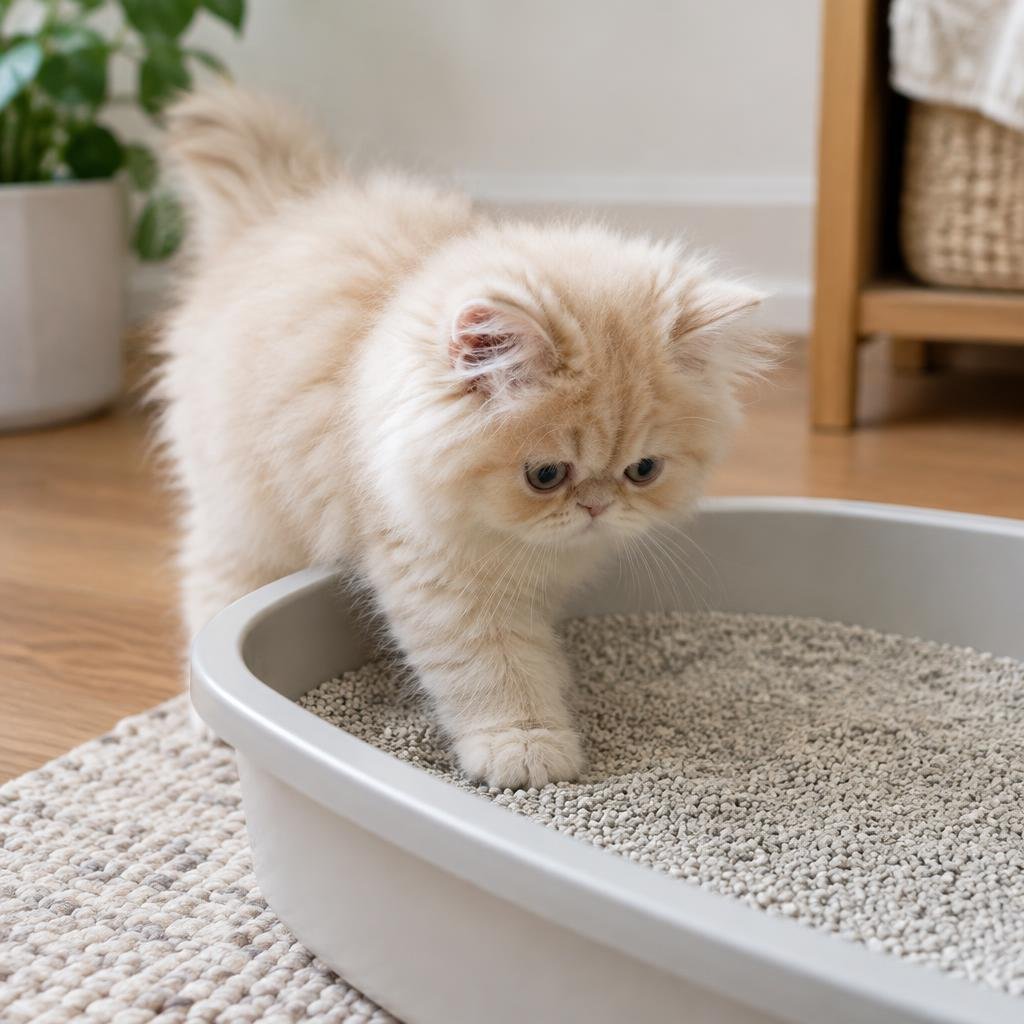
Most Persian kittens learn to use a litter box from their mother before they go to a new home. When your kitten arrives, show it where the litter box is and gently place it in the box after meals, naps, and playtime. Use a box with low sides so the kitten can climb in easily. Praise your kitten softly when it uses the box. If an accident happens, never punish the kitten. Simply clean the area well and continue guiding it to the box.
Common Litter Box Problems and Solutions
Sometimes Persian cats stop using the litter box or start going in other places. It is important to find out why.
A dirty box is one of the most common reasons. Scooping more often may solve the problem quickly. A change in litter type, box location, or box style can also upset your feline. If you recently made a change, try going back to what your feline used before.
Stress can lead to litter box problems. A new pet, a new baby, moving house, or loud noises may cause your Persian cat to feel anxious. Provide a calm, safe space and keep routines steady.
If your feline has painful joints, it may struggle to climb into a high-sided box. A lower box may help. If waste gets stuck in the long fur, your feline may associate the box with discomfort. A sanitary trim and gentle cleaning can help.
When Litter Box Problems Mean a Health Issue
Changes in litter box habits can be a sign of illness. Contact your vet if your Persian cat strains in the box, goes in and out of the box many times, cries while urinating, passes only small amounts of urine, has blood in the urine, urinates much more than usual, has diarrhea or constipation, or goes outside the box suddenly.
A male feline that strains and produces little or no urine needs emergency vet care immediately, because a urinary blockage can be life-threatening. Increased urination may be a sign of kidney disease or diabetes, which can affect Persian cats. Early action can make a big difference.
Cleaning Up Accidents
If your Persian cat has an accident outside the box, clean the area thoroughly with an enzyme cleaner made for pet urine. Regular cleaners may not remove the smell completely, and felines often return to places that smell like urine. Avoid ammonia-based cleaners, because ammonia smells similar to urine and may encourage your feline to use the same spot again.
Conclusion
A good litter box setup is a key part of caring for Persian cats. Choose a large, easy-to-enter box, a soft, low-dust litter that does not stick to long fur, and a quiet, private location. Scoop daily, wash the box regularly, and keep your feline's back end neatly trimmed and clean. If litter box habits change, look for simple causes first, and visit your vet if you notice signs of illness. With a clean and comfortable litter box, your Persian cat will stay happy, healthy, and tidy, and your home will stay fresh too.