
Pregnancy care
Persian Cats Pregnancy: Signs, Care, and What to Expect During Birth
Finding out that your Persian cat is expecting kittens can be exciting, but it can also feel a little overwhelming. Pregnancy and birth are natural processes, yet Persian cats have some special features that mean they need careful attention during this time. Their flat faces, round heads, and sometimes smaller body frames can make birth more difficult than in some other breeds. In this guide, you will learn the signs of pregnancy in Persian cats, how long pregnancy lasts, how to care for your pregnant feline, what to expect during birth, and when to call your vet.
A Note About Responsible Breeding
Before we begin, it is important to mention that breeding Persian cats should only be done by responsible, knowledgeable breeders. Persian cats can carry inherited health problems, such as polycystic kidney disease, so breeding felines should be health tested before mating. If you have a pet Persian cat and do not plan to breed, spaying is usually recommended. Spaying prevents unplanned litters and may reduce the risk of some health problems. Talk to your vet about the best time to spay your feline.
How Long Are Persian Cats Pregnant?
Feline pregnancy usually lasts about 63 to 65 days, which is roughly nine weeks. However, it can range from about 58 to 67 days. Persian cats follow the same general timeline as other felines. Keeping a record of the mating date helps you estimate when the kittens are due.
Signs That Your Persian Cat Is Pregnant
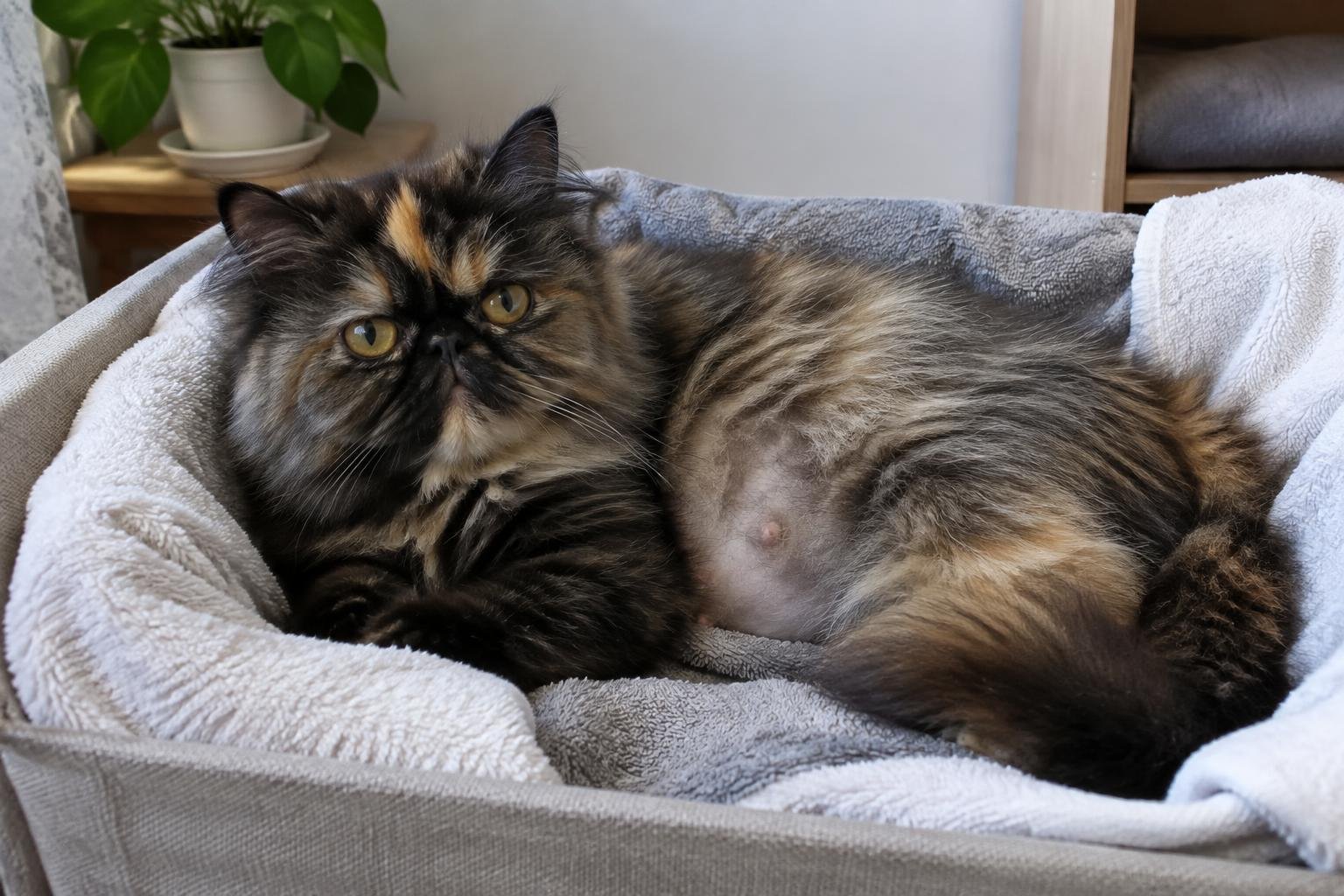
In the early weeks, it can be hard to tell whether a feline is pregnant. One of the first signs, around two to three weeks after mating, is "pinking up." The nipples become larger, pinker, and more noticeable. On a Persian cat, you may need to part the long fur on the belly to see them.
Some felines have a short period of reduced appetite or mild vomiting in early pregnancy. As the pregnancy continues, your feline's appetite will increase, and she will gain weight. Her belly will slowly become rounder, usually noticeable from around four to five weeks. Because Persian cats have thick coats, belly growth may be hidden at first.
Many pregnant felines become more affectionate and may seek extra attention. Others become quieter and prefer to rest. Near the end of pregnancy, you may see the kittens moving in the belly.
Confirming Pregnancy with Your Vet
If you think your Persian cat is pregnant, visit your vet. A vet can often feel the kittens by gently pressing the belly at around three to four weeks, though this should only be done by a professional to avoid harm. An ultrasound can confirm pregnancy from around three weeks. An X-ray later in pregnancy, usually after about six to seven weeks, can show the number of kittens and the size of their skulls. This is especially useful for Persian cats, because knowing the number and size of kittens helps the vet plan for a safe birth.
Feeding a Pregnant Persian Cat
Good nutrition is very important during pregnancy. Many vets recommend slowly switching a pregnant feline to a high-quality kitten food, because it has more calories, protein, and nutrients. As pregnancy progresses, your feline will need more food. Offer smaller meals more often, because the growing kittens take up space in her belly.
Keep fresh water available at all times. Do not give vitamins or supplements unless your vet recommends them, because too much of some nutrients can be harmful. Continue feeding kitten food while she is nursing, because she will need a lot of energy to produce milk.
Health Care During Pregnancy
Take your pregnant Persian cat to the vet for check-ups as advised. Your vet will check her health and may discuss vaccinations and parasite treatment. Some medicines, including some flea and worm treatments, are not safe during pregnancy, so never give any treatment without your vet's advice.
Keep your feline indoors and away from sick animals. Avoid lifting her by the belly. Continue gentle grooming, especially around the belly and back end, to keep her clean and comfortable. Many breeders gently trim the fur around the nipples and back end before birth, to keep the area clean and help kittens find the nipples. Ask a groomer or your vet for help if needed.
Preparing a Nesting Area
In the last week or two of pregnancy, your Persian cat will start looking for a safe place to give birth. Prepare a nesting box in a warm, quiet, private area of your home, away from noise and other pets. A large cardboard box or plastic box with low sides, lined with clean towels or soft blankets, works well. Cover part of the box to create a cozy, den-like space.
Introduce your feline to the nesting box a week or two before her due date. Place food, water, and a litter box nearby, but not too close to the nest. She may choose a different place, such as a closet or under a bed. If so, you can try moving the box there.
Signs That Labor Is Starting
As birth approaches, your Persian cat may become restless, pace, and visit her nesting box often. She may stop eating, groom her belly and back end, and vocalize more. Some felines become more clingy and want their owner close, while others want to be alone. Her body temperature may drop slightly about 12 to 24 hours before labor.
The Stages of Birth
Labor in felines has several stages. In the first stage, which can last from several hours up to around a day, contractions begin, but you may not see them clearly. Your feline may pant, purr, and seem restless.
In the second stage, strong contractions push the kittens out. Each kitten is usually born inside a thin sac. The mother will normally break the sac, lick the kitten to start its breathing, and chew through the umbilical cord. The third stage is the delivery of the placenta, which usually follows each kitten.
Kittens often arrive around 30 to 60 minutes apart, though the time between kittens can vary. Some felines rest for a while between kittens. Stay nearby, quietly watching, but try not to interfere unless there is a problem.
Why Birth Can Be Harder for Persian Cats
Persian kittens have large, round heads and broad shoulders, which can make birth more difficult. Some Persian mothers also have less efficient contractions. Because of these factors, Persian cats are more likely than some breeds to need help during birth, including a cesarean section, which is a surgery to deliver the kittens.
This is why it is important to plan ahead with your vet. Have your vet's phone number and an emergency clinic's details ready before the due date.
When to Call the Vet
Contact your vet immediately if your feline has strong contractions for more than about 20 to 30 minutes without producing a kitten, if a kitten is stuck and visible for more than a few minutes, if there is a long break of more than two hours between kittens and you believe more are inside, if there is heavy bleeding or foul-smelling discharge, if your feline seems weak, collapses, or is in severe distress, or if pregnancy goes beyond about 67 days without signs of labor. Also call if there is green or dark discharge before the first kitten arrives. When in doubt, always call.
Caring for the Mother and Newborn Kittens
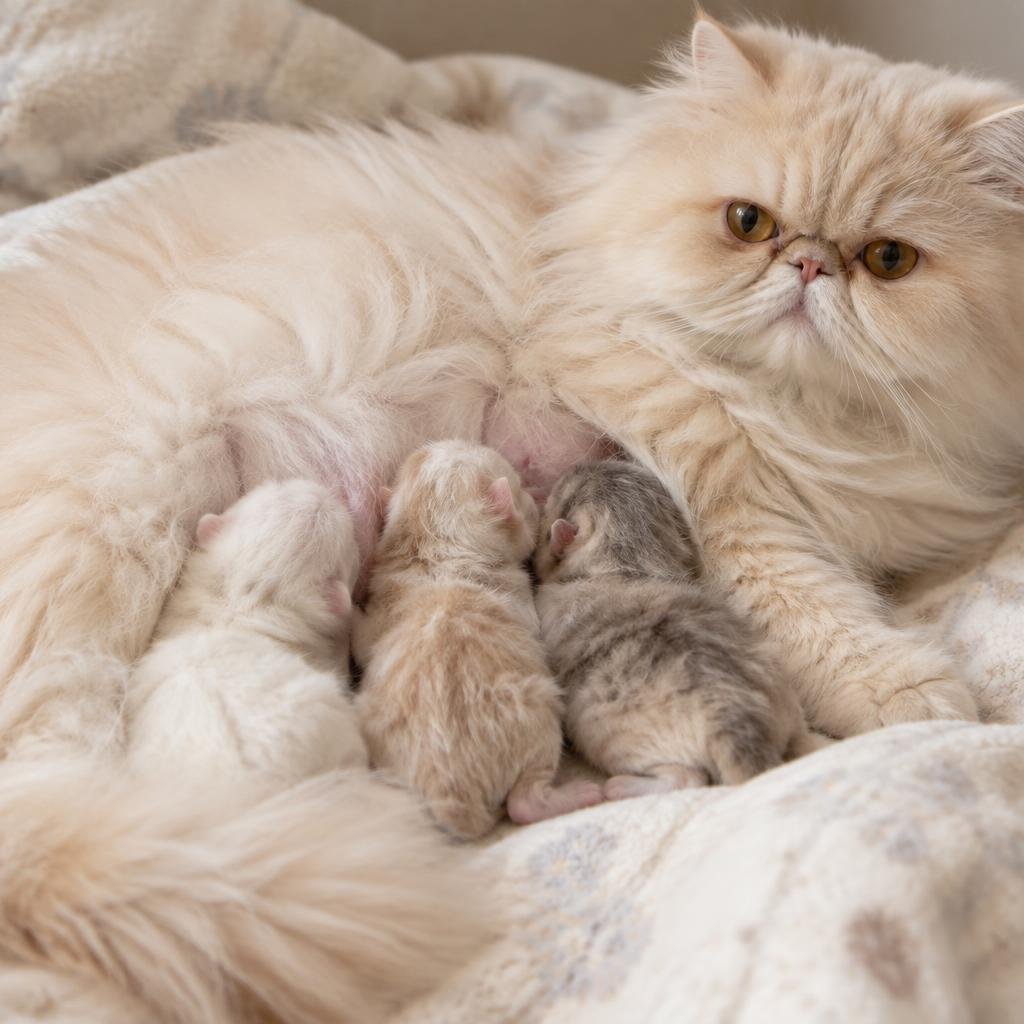
After birth, the mother feline will clean her kittens, feed them, and keep them warm. Keep the nesting area warm, quiet, and clean. Replace soiled bedding gently. Make sure the mother eats, drinks, and uses her litter box.
Check that all kittens are nursing and gaining weight. Weighing kittens daily with a kitchen scale is a good way to monitor their health. Persian kittens with very flat faces may have more difficulty nursing, so watch them closely. Contact your vet if a kitten is weak, cold, crying constantly, not feeding, or losing weight, or if the mother shows signs of illness, such as fever, swollen or painful nipples, or lack of interest in the kittens.
Conclusion
Pregnancy in Persian cats is a special time that requires careful planning and attention. By learning the signs of pregnancy, providing good nutrition and vet care, preparing a quiet nesting area, and knowing when to seek help during birth, you can help your Persian cat through pregnancy safely. Because Persian cats can face extra challenges during birth, working closely with your vet is essential. With love, patience, and good care, you can support your feline as she welcomes a litter of beautiful, fluffy Persian kittens into the world.