Coat care
Do Persian Cats Shed a Lot? How to Control Shedding and Feline Hair at Home
If you are thinking about bringing home one of the beautiful Persian cats, you have probably wondered about all that fur. Persian cats have one of the longest and thickest coats in the feline world, and yes, they do shed. Loose hair can end up on your sofa, bed, clothes, and floors. But shedding does not have to take over your home. With the right grooming routine and a few smart cleaning habits, you can keep both your feline and your house looking neat. In this guide, you will learn why Persian cats shed, when shedding gets heavier, and how to control it easily.
Do Persian Cats Shed?
Yes, Persian cats shed, and many shed quite a lot. All felines lose old hair so that new hair can grow in its place. This is a natural and healthy process. Persian cats have a double coat, which means they have a soft, dense undercoat close to the skin and a long, flowing outer coat on top. Both layers shed, and because there is so much fur, the amount of loose hair can be large.
The difference with Persian cats is that their long, fine hair does not always fall away easily. Instead, loose hair can get trapped in the coat, where it tangles with other hairs and forms mats. This is why daily brushing is so important for Persian cats. It removes loose fur before it can mat or end up all over your home.
When Do Persian Cats Shed the Most?
Persian cats shed throughout the year, but many shed more heavily at certain times. In many places, felines shed more in spring, when they lose their thick winter undercoat, and again in autumn, when they prepare for a new coat. During these seasonal changes, you may notice much more fur on your brush and around the house.
Indoor Persian cats that live in homes with artificial light and steady temperatures may shed more evenly throughout the year instead of in strong seasons. Every feline is different, so watch your own feline's pattern.
Other Reasons Persian Cats May Shed More
Sometimes, extra shedding is caused by something other than the season. Stress can cause a sudden increase in shedding. A move to a new home, a new pet, loud building work, or a visit to the vet may trigger a burst of loose hair.
Diet also affects the coat. A feline that does not get enough good protein and healthy fats may have a dry, dull coat that sheds more. Female felines may shed more after having kittens, and some felines shed more as they grow older.
Health problems can also cause heavy shedding or hair loss. Fleas, skin allergies, fungal infections such as ringworm, hormone problems, and other illnesses may affect the coat. If you notice bald patches, red or flaky skin, constant scratching, or very sudden heavy shedding, take your Persian cat to the vet.
Daily Brushing: The Best Way to Control Shedding
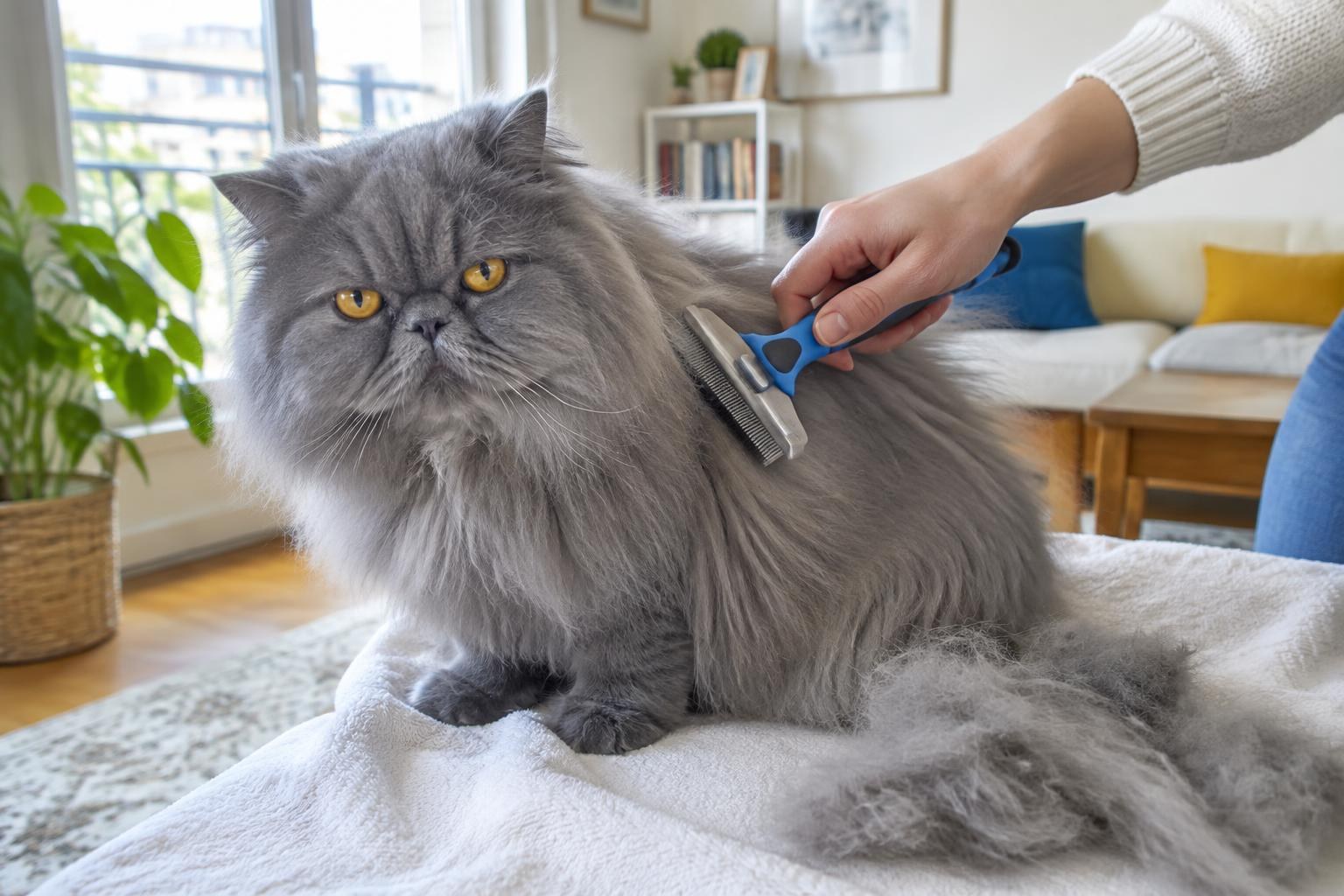
The single most effective way to control shedding in Persian cats is daily brushing. When you brush every day, you catch loose hair in the brush instead of on your furniture. You also prevent mats and reduce hairballs, because your feline swallows less fur when it cleans itself.
Use a wide-tooth metal comb to work gently through the coat, reaching all the way down to the skin. Then use a fine-tooth comb for smaller areas like the face and around the ears. A soft slicker brush helps smooth and fluff the outer coat. During heavy shedding seasons, you may want to brush twice a day for a short time.
Work in small sections and be especially careful in areas where fur tangles easily, such as behind the ears, under the legs, around the belly, and on the back legs. Be gentle, keep sessions short and pleasant, and reward your feline with praise or a treat.
Bathing to Reduce Loose Fur
A regular bath can help remove a large amount of loose undercoat. Many Persian cats are bathed every three to six weeks. Always comb out all tangles before bathing, because water can tighten mats. Use a gentle shampoo made for felines, rinse very well, and dry your feline completely with a towel and a hair dryer on a low, cool setting while combing. After a bath and blow-dry, you will often see a lot of loose fur come out, which means less shedding around the house in the following days.
Professional Grooming
Many owners take their Persian cats to a professional groomer every few weeks or months. A groomer can give a thorough bath, blow-dry, de-shedding treatment, and sanitary trim. Some owners choose a shorter "lion cut" or summer trim, especially in hot climates, which can greatly reduce loose fur in the home. Always choose a groomer who has experience with Persian cats and handles them gently.
Diet and Hydration for a Healthy Coat
A healthy coat starts from the inside. Feed your Persian cat a complete and balanced diet with good animal protein. Omega-3 and omega-6 fatty acids help support healthy skin and a shiny coat, and many good-quality feline foods include them. Ask your vet before adding any supplements.
Water is also important for healthy skin. Keep fresh water available at all times, and consider adding wet food to your feline's diet for extra moisture. A feline water fountain may encourage your Persian cat to drink more.
Keeping Your Home Free of Feline Hair
Even with great grooming, some fur will end up around your home. A few good habits can make cleaning much easier. Use a vacuum cleaner with strong suction and a pet hair tool, and vacuum sofas, rugs, and floors several times a week. A damp rubber glove or rubber broom is excellent for gathering hair from furniture and carpets.
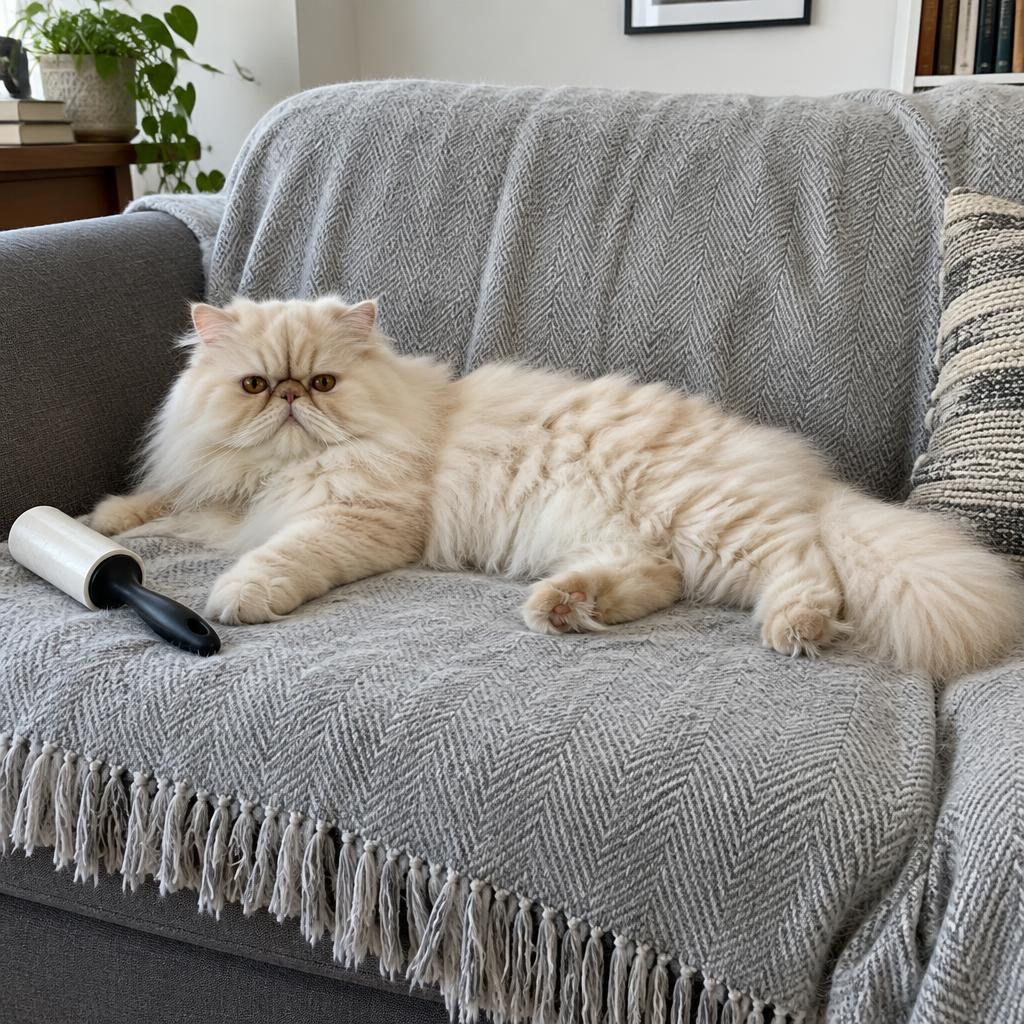
Keep lint rollers near the door and in your bag for quick clothing touch-ups. Cover your feline's favorite sleeping places with washable blankets or throws, and wash them often. This protects your furniture and collects much of the loose fur in one easy-to-clean place. An air purifier with a good filter can help reduce floating hair and dander in the air.
Try to choose fabrics that do not hold onto fur too strongly. Smooth materials such as leather or tightly woven cotton are often easier to clean than velvet or loose knits.
Brushing Area and Routine
It helps to choose one spot in your home for grooming, such as a bathroom or a room with a hard floor that is easy to sweep. Place a towel on your lap or on a table, and brush your Persian cat there. After each session, you can quickly gather the fur and throw it away. Having a regular time and place for grooming also helps your feline feel relaxed, because Persian cats love routine.
Are Persian Cats Good for People with Allergies?
Many people think long-haired felines cause more allergies, but feline allergies are mainly caused by a protein found in feline saliva, skin, and dander, not by the length of the hair. Persian cats are not hypoallergenic. However, because Persian cats shed a lot, the hair can carry allergens around the home. If you or a family member has allergies, spend time with Persian cats before bringing one home, and speak with a doctor for advice.
Shedding vs Hair Loss: Knowing the Difference
Normal shedding means you find loose hair on the brush and around the home, but your feline's coat still looks full and healthy. Hair loss is different. If your Persian cat has thin areas, bald spots, broken hairs, or skin that looks red, scaly, or sore, it may have a medical problem. Over-grooming, where a feline licks one area again and again, can also cause hair loss and may be linked to stress, pain, or skin conditions. In these cases, a vet visit is the best step.
Conclusion
Persian cats do shed, and sometimes they shed a lot, but it is a normal part of having such a luxurious coat. Daily brushing, regular baths, good nutrition, and fresh water help keep shedding under control. Simple cleaning habits, such as washable blankets, lint rollers, and regular vacuuming, keep your home neat and comfortable. Watch for signs of unusual hair loss or skin problems, and visit your vet if something seems wrong. With a little effort each day, you can enjoy all the beauty and love of your Persian cat without drowning in fur.