Weight and nutrition
Persian Cats Weight Guide: Healthy Weight, Obesity Risks, and Safe Weight Loss
Persian cats are calm, gentle, and happy to spend long hours relaxing on a soft cushion. This peaceful lifestyle is part of their charm, but it also means that Persian cats can gain weight easily. Because their thick, fluffy coats hide their body shape, many owners do not notice when their Persian cat becomes overweight. Extra weight can cause serious health problems and shorten your Persian cat's life. In this guide, you will learn how much Persian cats should weigh, how to check your Persian cat's body condition, the risks of obesity, and safe ways to help your Persian cat reach and keep a healthy weight.
How Much Should Persian Cats Weigh?
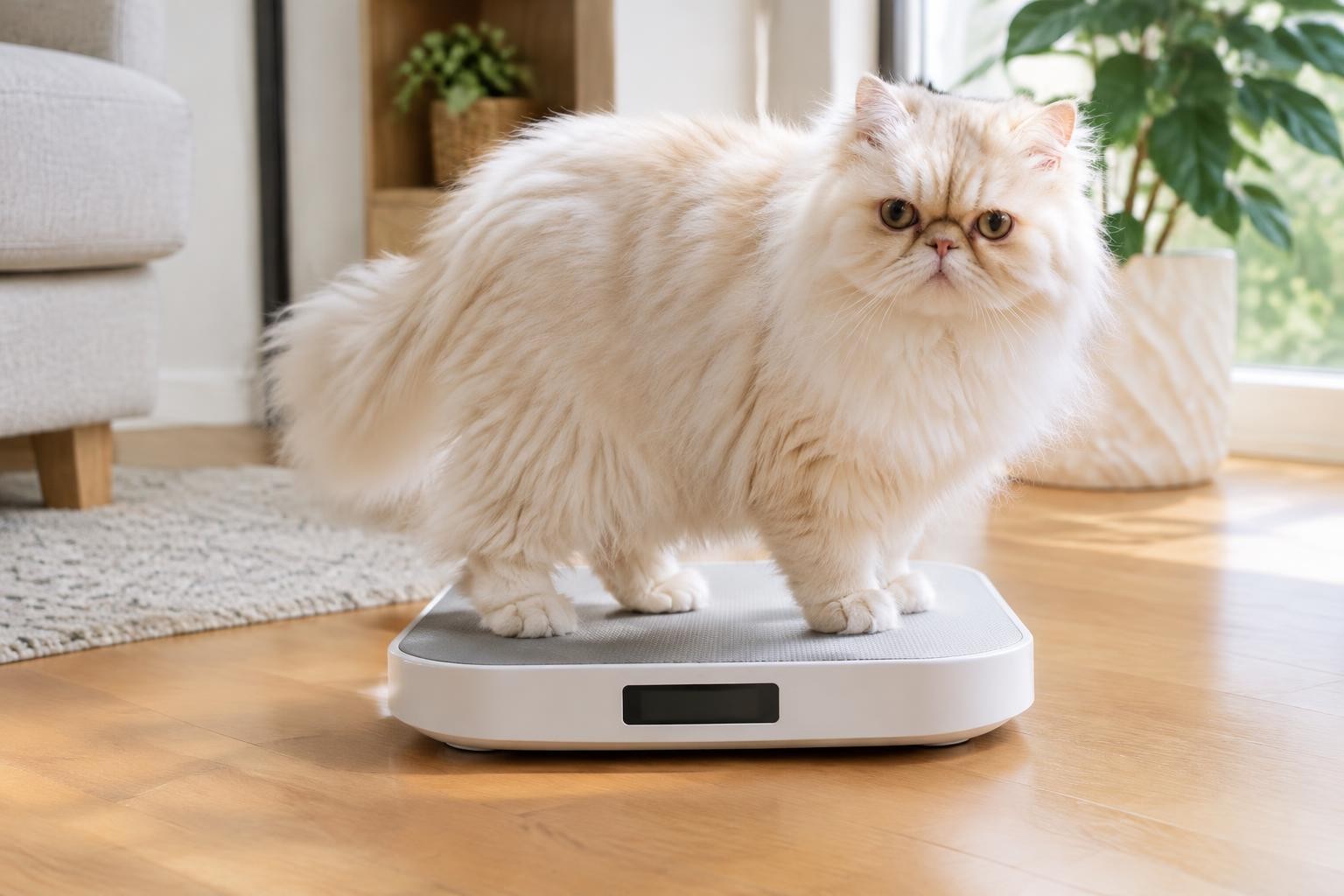
Persian cats are medium-sized felines with a sturdy, compact body. Most adult Persian cats weigh around 3 to 5.5 kilograms (about 7 to 12 pounds). Males are usually larger and heavier than females. Some large males may weigh a little more and still be healthy.
However, the number on the scale is only part of the story. Two Persian cats of the same weight may look very different depending on their bone structure and muscle. This is why vets use "body condition" to judge whether a Persian cat is at a healthy weight.
How to Check Your Persian Cat's Body Condition
Because Persian cats have so much fur, it is hard to judge their shape just by looking. Instead, use your hands. Gently run your hands along your Persian cat's sides. You should be able to feel the ribs easily under a thin layer of fat, without pressing hard. If you cannot feel the ribs at all, your Persian cat may be overweight. If the ribs feel very sharp and prominent, your Persian cat may be underweight.
Next, feel along the spine and hips. They should be covered with a little padding but still easy to feel. Then feel your Persian cat's waist, just behind the ribs. A healthy Persian cat has a slight inward curve here. Finally, check the belly. Many Persian cats have a small, loose fold of skin on the lower belly, often called a "primordial pouch," which is normal. But a round, firm, hanging belly may be a sign of extra fat.
A bath is a good time to see your Persian cat's true shape, because the wet fur lies flat against the body. Your vet can also score your Persian cat's body condition at each check-up.
Why Persian Cats Gain Weight Easily
Several factors make Persian cats more likely to gain weight. They are naturally calm and less active than many other breeds, so they burn fewer calories. Most Persian cats live indoors, where they have fewer chances to run, climb, and explore.
Spaying and neutering can lower a Persian cat's energy needs, so Persian cats may gain weight if their food portions are not adjusted after surgery. Free feeding, where food is left out all day, and giving too many treats are also common causes of weight gain. As Persian cats get older, they often become even less active, which can lead to more weight gain in middle age.
Health Risks of Obesity in Persian Cats
Extra weight can cause many health problems. Overweight Persian cats are more likely to develop diabetes, a condition where the body cannot control blood sugar properly. Extra weight puts pressure on joints and can lead to arthritis and pain.
For flat-faced Persian cats, obesity can make breathing even harder, because fat around the chest and neck adds pressure to the airway. Overweight Persian cats also overheat more easily, which is dangerous for Persian cats in hot weather.
Overweight Persian cats may struggle to groom themselves, especially around the back end, which can lead to mats, dirty fur, and skin infections. Obesity can also increase the risk of urinary problems and liver disease, and may shorten a Persian cat's life.
Never Put a Persian Cat on a Crash Diet
If your Persian cat is overweight, it is important to help it lose weight slowly and safely. Never suddenly reduce food by a large amount or stop feeding your Persian cat. Persian cats that stop eating or lose weight too quickly can develop a serious liver condition called hepatic lipidosis, or fatty liver disease. This can be life-threatening. Always plan weight loss with your vet.
Working with Your Vet
Your vet can weigh your Persian cat, check its body condition, and set a target weight. They will calculate how many calories your Persian cat needs each day to lose weight safely, usually at a slow, steady rate. They may recommend a special weight-loss diet, which is designed to help Persian cats feel full while eating fewer calories. Regular weigh-ins, perhaps every two to four weeks, help track progress and adjust the plan.
Measure Food Carefully
One of the easiest ways to control your Persian cat's weight is to measure its food accurately. Use a kitchen scale instead of a cup, because cups can be inaccurate. Divide the daily amount into two to four small meals. Stop free feeding and remove any leftover food after mealtime.
If more than one person feeds your Persian cat, make sure everyone knows the plan. It is easy for a Persian cat to get extra meals when several family members feed it without knowing.
Treats in Moderation
Treats are a lovely way to show love, but they can add many calories. Treats should make up only a small part of your Persian cat's daily food, often suggested as around 10 percent or less. Choose low-calorie treats, break them into tiny pieces, or use a few pieces of your Persian cat's regular dry food as treats. Avoid giving table scraps, which are often high in fat and salt.
Use Food to Encourage Activity
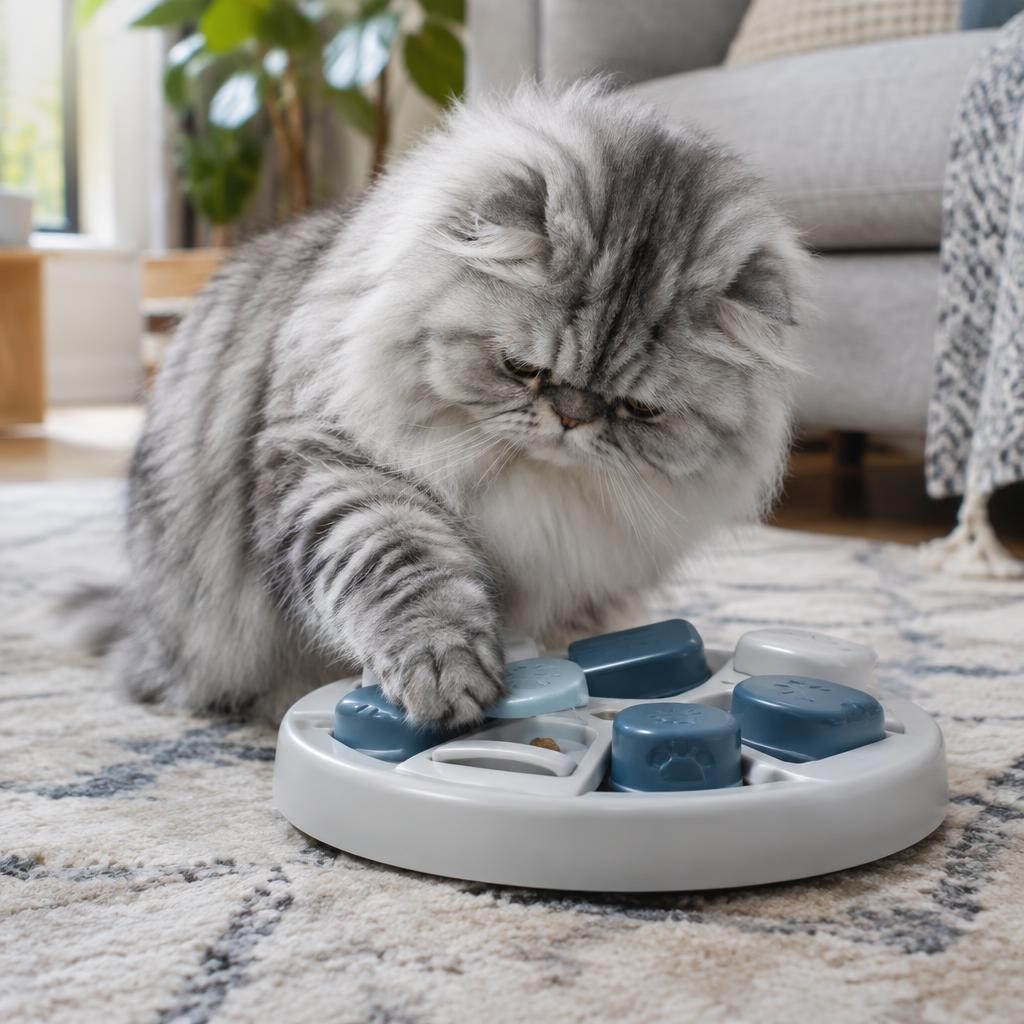
Puzzle feeders and treat balls make your Persian cat work for its food, which slows down eating and adds activity. You can also hide small portions of food around the house for your Persian cat to find. These games give mental stimulation and gentle exercise, which is perfect for calm Persian cats.
Gentle Exercise for Persian Cats
Persian cats may not love intense exercise, but they enjoy gentle play. Try two or three short play sessions a day, each around 10 to 15 minutes. Use a feather wand and move it slowly along the floor, encouraging your Persian cat to stalk and pounce. Roll soft balls or toy mice. A low climbing tree with wide platforms can encourage gentle climbing.
Increase activity slowly, especially for very overweight Persian cats, and stop if your Persian cat begins to pant or breathe hard. Play during cooler times of day, because flat-faced felines can overheat easily.
Helping an Underweight Persian Cat
Some Persian cats are underweight rather than overweight. Weight loss without a clear reason can be a sign of illness, such as dental disease, kidney disease, thyroid problems, or diabetes. If your Persian cat is losing weight, eating less, or looks thin, take it to your vet. Do not simply increase food without finding out the cause.
Keeping Track of Progress
Weigh your Persian cat regularly. You can weigh yourself on a bathroom scale, then weigh yourself holding your Persian cat, and subtract the difference. A baby scale or pet scale is even more accurate. Keep a simple chart of your Persian cat's weight, food amounts, and activity. Celebrate small successes, because slow and steady progress is the goal.
Conclusion
Keeping Persian cats at a healthy weight is one of the most important things you can do for their long-term health. Because their fluffy coats hide their true shape, use your hands to check body condition regularly. Measure food carefully, limit treats, use puzzle feeders, and encourage gentle daily play. If your Persian cat needs to lose weight, work with your vet to create a safe, slow plan. A healthy weight helps your Persian cat breathe easier, move comfortably, groom better, and enjoy a longer, happier life by your side.